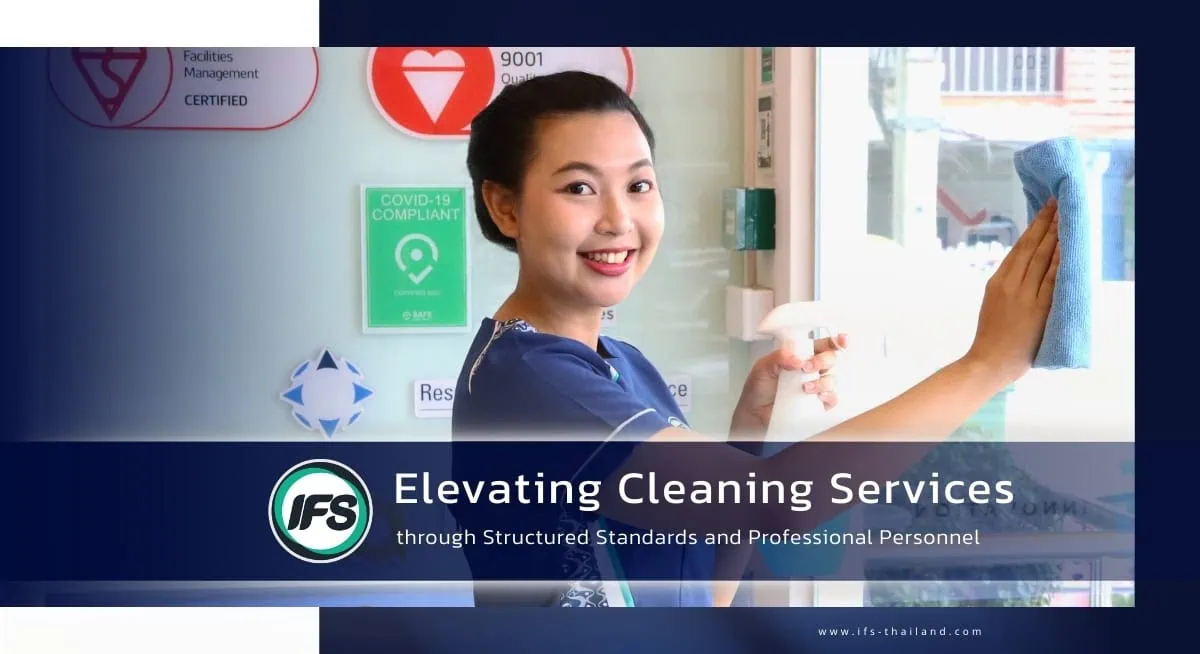
The decision to select a corporate cleaning service provider does not begin with evaluating the end result or determining whether a space appears clean. It begins with a more tangible question: What cleaning standards does the provider have in place, and can those standards effectively govern day-to-day operations?
In practice, cleaning standards refer to a clearly defined operational framework established in advance. This includes cleaning procedures for different types of areas, service frequency, workforce allocation, quality control methods, and performance monitoring. Such standards enable organizations to assess a provider’s readiness before operations begin, rather than waiting for issues to arise onsite.
For organizations responsible for large facilities or multiple business units, cleanliness is not the starting point of the decision-making process. It is the outcome of a properly designed cleaning system that is consistently managed and controlled.
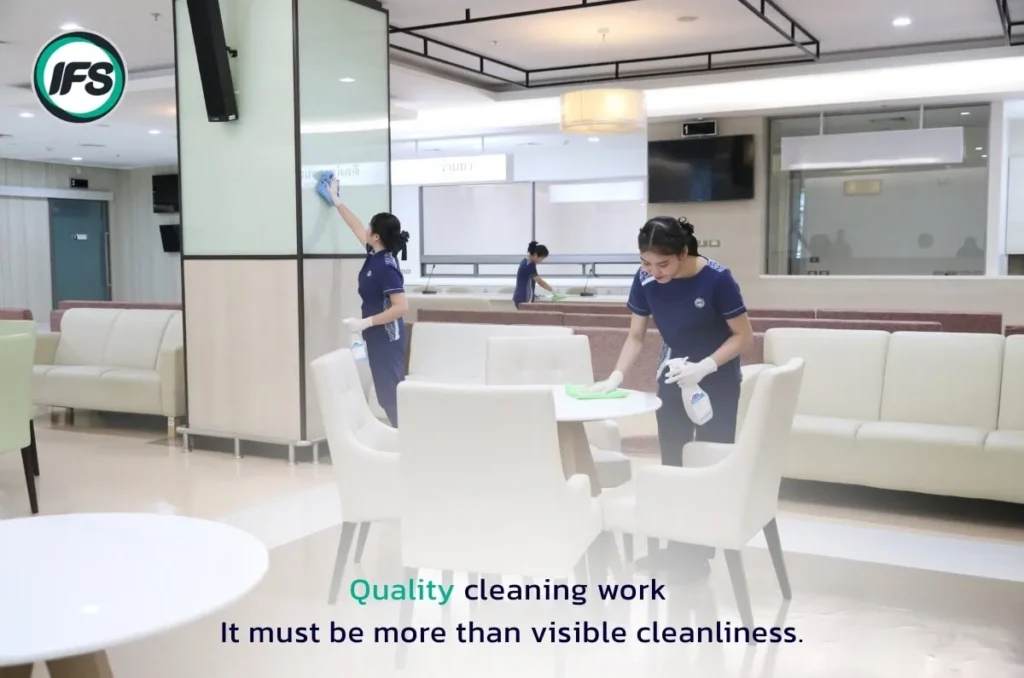
Cleaning Quality Must Go Beyond What Is Visible
Many areas may appear clean at first glance. However, appearance alone does not confirm that services are delivered in accordance with the cleaning standards an organization should expect. The key difference lies in the system behind the work.
- Surface-level cleanliness results from effort and intent.
- Standardized cleanliness results from systems, consistency, and verification.
As a result, many organizations now seek providers who offer more than manpower. They look for partners capable of designing cleaning systems that are consistent, measurable, and adaptable across diverse environments.
Quality cleaning must be measurable, not assumed.
What Should Corporate Cleaning Standards Include?
At the corporate level, cleaning standards are often misunderstood as merely manuals or inspection checklists. In reality, effective standards must consist of integrated components that function as a cohesive system.
Clearly Defined Operational Structure
In practice, operational structure defines who does what, where, and how often. Cleaning standards must clearly distinguish between daily cleaning, deep cleaning, and specialized services to ensure that each area receives appropriate care, rather than applying a single approach to all spaces.
Establishing differentiated procedures and frequencies based on the nature of each area ensures goal-oriented execution, reduces reliance on individual experience, and allows supervisors to verify that all required tasks are completed as specified.
Quality Control and Inspection Systems
A quality control system ensures that standards extend beyond documentation and are implemented in practice. Standardized cleaning must include defined inspection criteria, such as key checkpoints, evaluation methods, and reporting formats, to enable continuous performance tracking.
Effective inspections are not intended to assign blame. They are designed to identify issues early and resolve them before they affect facility operations or create additional burdens for building management.
Personnel Readiness and Role Clarity
At the corporate level, housekeeping standards are not measured by headcount but by clarity of roles and depth of understanding. Each employee must clearly understand their responsibilities, scope of work, and accountability to ensure seamless coordination without gaps or duplication.
To ensure that the operational structure functions as intended, personnel must receive standardized training aligned with defined procedures rather than relying on habit or individual work styles, which often lead to inconsistent service quality.
Equipment, Chemical Management, and Safety
Equipment and chemical management are essential components of cleaning standards that are often overlooked. A well-designed system must specify which tools and cleaning agents are appropriate for each type of area, as well as proper storage and safe usage procedures.
Effective management reduces risks to personnel, prevents surface damage, and ensures that cleaning operations are conducted safely in accordance with established standards.
Collectively, these elements demonstrate that corporate cleaning standards are not simply written guidelines. They form an operational structure that organizations use to define, control, and evaluate service quality systematically.
Strong standards do not only define what must be done. They define the level of quality that must be achieved.
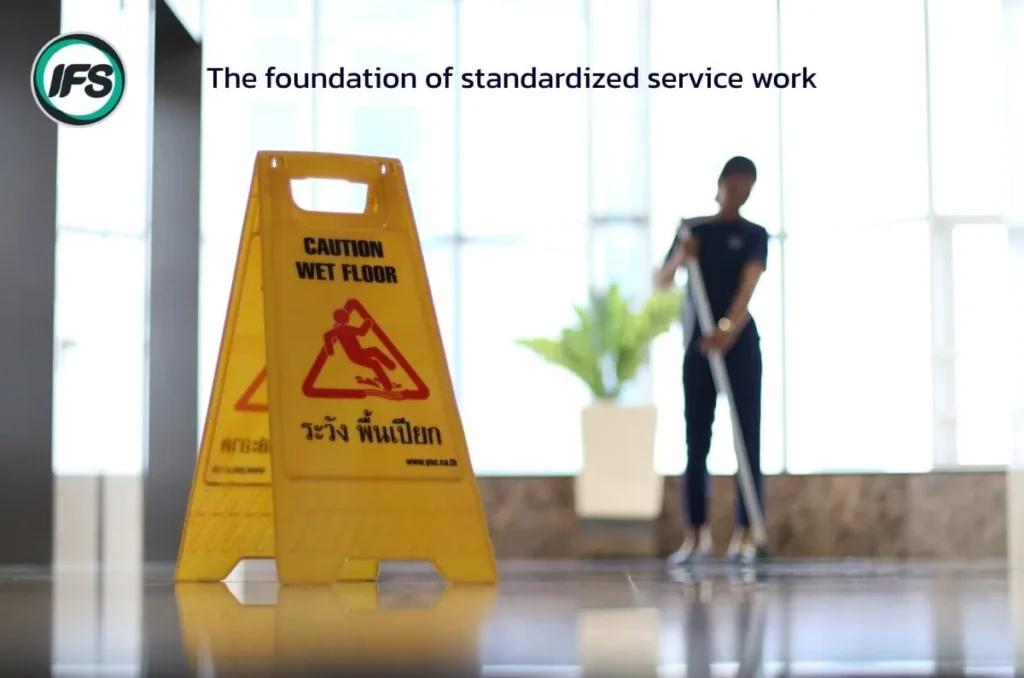
Workforce Development: The Foundation of Standardized Service
Regardless of how well a system is designed, standards can’t be implemented without personnel who truly understand the work. Professional staff are the foundation of standardized cleaning services.
System-driven services require more than procedural compliance. They require an understanding of purpose. Employees must recognize the rationale for each procedure, understand area-specific risks, and be aware of the consequences of failing to maintain standards.
Structured training therefore goes beyond teaching tool usage. It establishes a mindset centered on quality, safety, and shared accountability.
For this reason, IFS Group places strong emphasis on systematic workforce development, from recruitment and training to ongoing onsite performance monitoring.
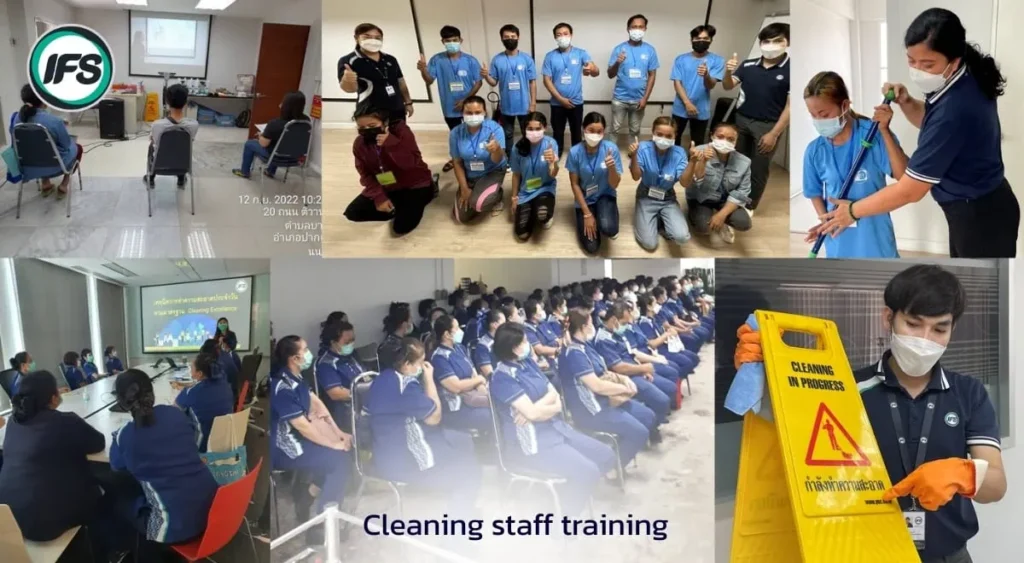
Practical Training Processes and Nationwide Standardized Training Centers
IFS has developed a training structure centered on real operational environments. Through standardized training centers designed to simulate various building types, personnel gain practical, hands-on experience.
Training extends beyond classroom instruction and covers:
- Office buildings, industrial facilities, hospitals and specialized environments
- Proper equipment and chemical selection based on surface characteristics.
- Cleaning procedures aligned with area-specific risk levels.
All personnel must complete foundational training, specialized industry-specific programs, and periodic refresher courses to maintain housekeeping standards in alignment with evolving work environments.
IFS prioritizes ensuring that standards can be fully implemented in real-world operations.
Quality and Safety Standards for Real-World Work Environments
Cleaning services within organizations cannot be separated from safety considerations. Service standards must address not only work quality but also the safety of personnel, building occupants, and all stakeholders associated with the facility.
In practice, IFS Group establishes clear quality and safety standards, from appropriate equipment selection and proper chemical handling to risk assessments for each operational area.
Quality control is not achieved through a single inspection. It is an ongoing process that integrates onsite data, inspection teams, and systematic performance evaluation.
Conclusion: Cleaning Standards in Corporate Operations
When viewed holistically, corporate cleaning standards are not theoretical concepts. They serve as operational frameworks that integrate systems, processes, personnel, and safety into a structured model.
Clearly defined standards enable organizations to establish consistent operational guidelines, maintain quality control, reduce facility management discrepancies, and ensure that buildings remain ready to support real-world usage.
In practice, standardized cleaning services become an integral component of an organization’s facility management structure, from operational methods and role definitions to the quality levels that must be maintained. This enables facility managers to monitor, track, and control environmental quality continuously.
The Role of IFS in Elevating Corporate Cleaning Standards
IFS Group provides corporate-level cleaning services throughout Thailand. The company designs operational systems capable of managing large-scale facilities and multi-unit operations simultaneously under a centralized management structure that ensures consistent standards across all sites.
With over 40 years of industry experience, more than 30,000 employees nationwide, and service coverage across over 2,000 organizational projects, IFS has developed a standards-driven approach encompassing system design, workforce development, quality control, and safety management.
IFS does not position itself solely as a contractual cleaning service provider. The company acts as a corporate cleaning partner and an integral part of an organization’s support structure. IFS manages cleaning operations under a unified corporate standard while adapting execution to the specific context and requirements of each facility, supporting clients’ long-term operational success.
Interested in elevating your organization’s cleaning standards? Click here.