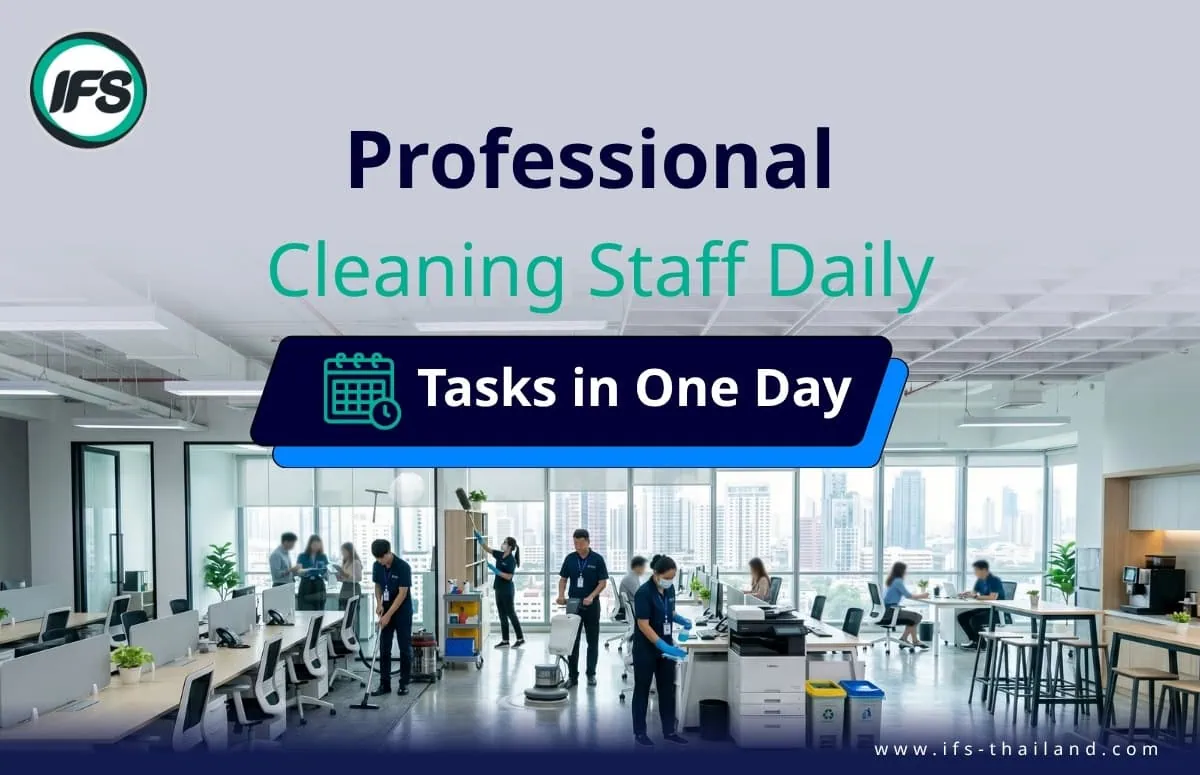
What do professional cleaning staff do in one day? Many people may see cleaning as simply sweeping, mopping, or wiping surfaces. However, in real operations, every task is carefully planned and performed according to clearly defined procedures.
These procedures help organizations maintain cleaning quality, workplace safety, and a professional corporate image.
This article will help you understand the real workflow of professional cleaning staff, from pre-shift preparation and daily operations to final quality inspections. It also explains what effective office cleaning standards should include and what organizations should consider when selecting a professional cleaning service provider.
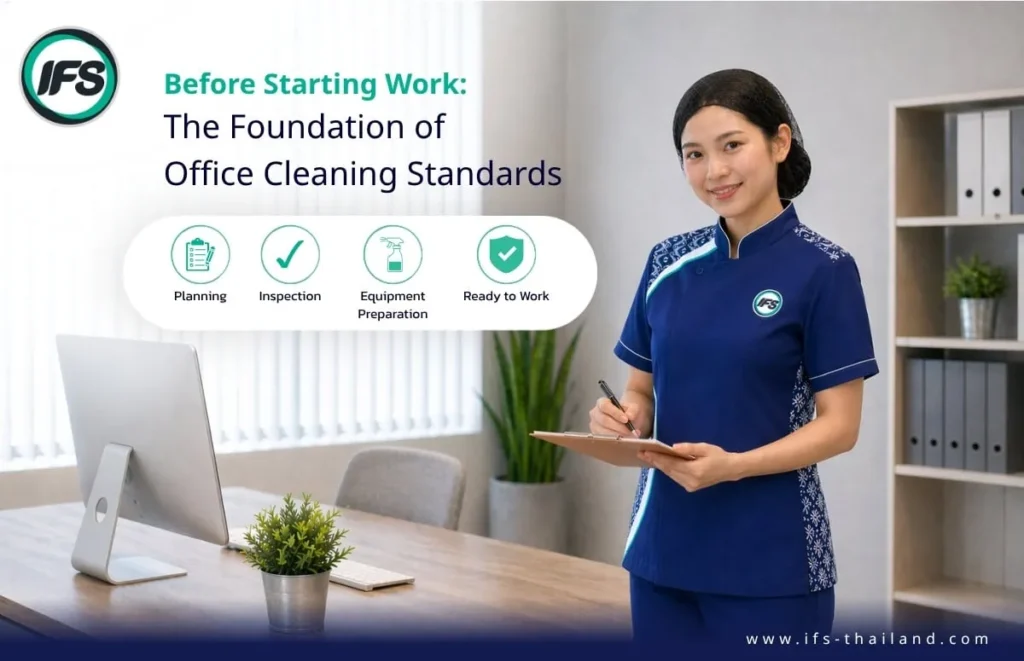
Before work begins: The foundation of Office Cleaning Standards
Many people assume cleaning work begins as soon as staff pick up their equipment. However, at IFS, our teams always complete a preparation process before starting daily operations.
This includes inspecting equipment condition, selecting the correct chemicals for each surface type, and wearing all required protective equipment, including gloves and face masks. Teams also review daily assignments carefully before entering the work area.
Although these steps may seem minor, they are essential in corporate cleaning operations. Proper preparation directly affects service quality throughout the day.
An unprepared start often leads to inconsistent results, and that is not acceptable under IFS service standards.
How Professional Cleaning meets Standards from the Beginning
Once work begins onsite, the difference between professional cleaning services and general cleaning becomes clear.
At IFS, all staff follow the same operational procedures instead of relying on personal habits or individual judgment.
Each step in the workflow has a specific purpose. For example, staff clean, cleaner areas first before moving into dirtier zones. Cleaning is also performed from higher surfaces downward.
These methods are not simply operational routines. They help prevent cross-contamination between areas and maintain consistent cleaning quality regardless of who performs the task.
Another important practice is separating cleaning tools by usage area. Different coloured cloths are used for restrooms and general office areas.
Although this may sound like a small detail, it is one of the important hygiene control measures that helps reduce sanitation risks within the workplace.
Cleaning does not end after one round
Under IFS standards, office cleaning does not end after a single cleaning cycle. It is an ongoing process carried out throughout the day.
Staff routinely inspect high-traffic areas such as restrooms, waste disposal points, and shared spaces to ensure the environment remains ready for use at all times.
In real operations, unexpected situations can occur at any moment, including spills, wet floors, or incidents requiring immediate attention.
For this reason, IFS establishes clear operational guidelines and response procedures so teams can resolve issues systematically, quickly, and without disrupting overall facility usage.
For IFS, professional cleaning standards mean maintaining areas in a condition that is consistently ready for use.
From an organizational perspective, operational procedures help control service quality. From the user perspective, the visible result is a clean and safe environment without concerns about problems occurring during the day.
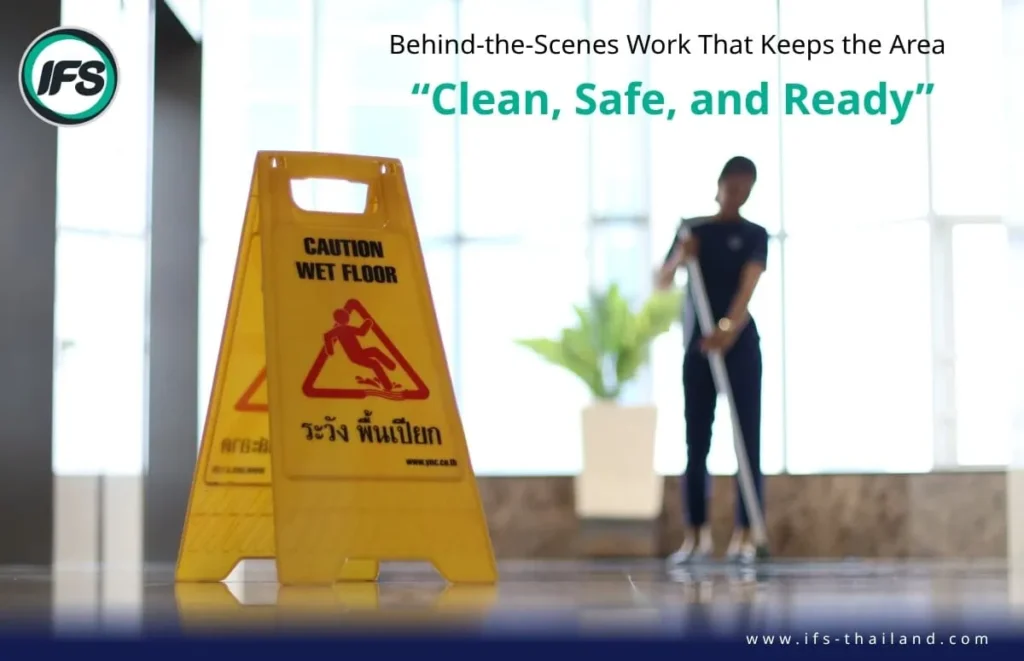
Behind-the-scenes work that keeps areas Clean, Safe, and Ready
Beyond visible cleanliness, another important factor that directly affects workplace quality is safety.
Under IFS standards, safety management must cover:
- During cleaning operations.
- After cleaning is completed.
- During normal facility usage.
During operations, teams select equipment and chemicals appropriate for each surface type by referencing Safety Data Sheets (SDS). Staff also wear Personal Protective Equipment (PPE) based on the task being performed.
Warning signs are installed in risk areas, such as wet floors or active cleaning zones, to reduce operational risks during cleaning.
After operations are completed, teams prepare the area for safe use by checking floor conditions and storing equipment properly.
During normal building operations, staff continue routine inspections while observing abnormalities such as slippery floors, damaged equipment, or environmental conditions that may lead to accidents.
This allows problems to be corrected before they affect building users.
All of these practices reflect the standards of a professional cleaning service provider that focuses on maintaining areas that are consistently clean, safe, and ready for use.
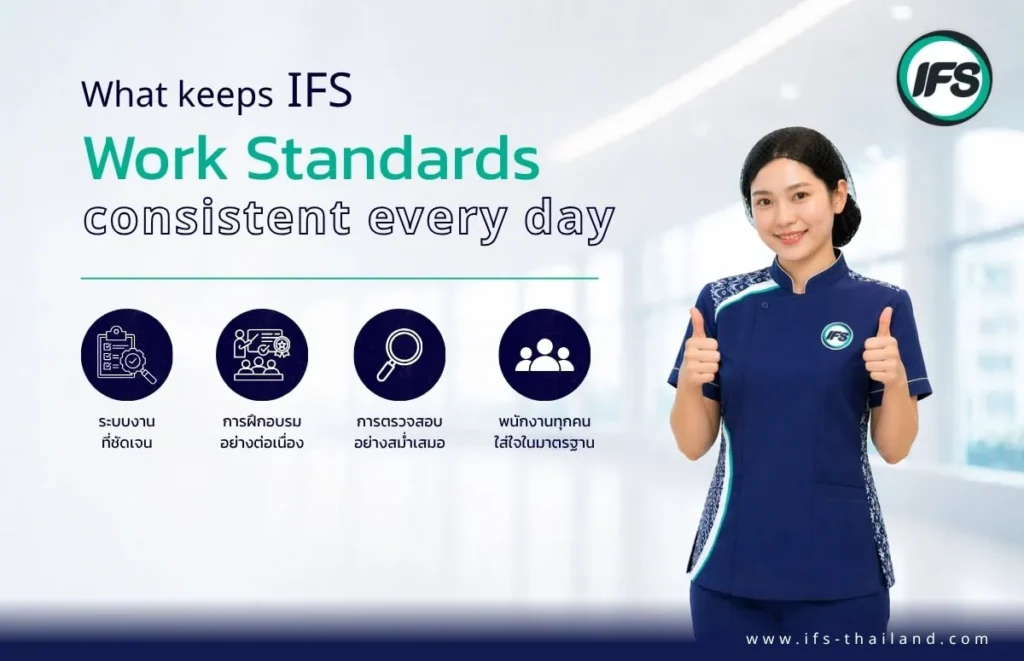
What keeps IFS Standards consistent every day
In corporate cleaning services, consistent quality does not happen automatically. It comes from systems and operational processes designed to maintain stable results regardless of the team or location.
IFS controls service quality through standardized procedures that do not rely on individual discretion.
Quality control includes onsite inspections, structured checklists, and measurable performance indicators such as user satisfaction scores and complaint statistics.
In addition, IFS applies technology and innovation to cleaning quality management through real-time monitoring systems.
This allows both management teams and clients to review operational performance directly without waiting for summary reports.
These practices help ensure that IFS cleaning operations remain transparent, measurable, and consistently maintained.
General Housekeeping vs Professional Cleaning Staff
| Topic | General Housekeeping | IFS Professional Cleaning Staff |
| Work Method | Based on personal experience | Based on trained operational standards |
| Quality | Inconsistent | Controlled and measurable |
| Inspection Process | Depends on the situation | Includes inspections and measurable results |
Daily Workflow of Professional Cleaning Staff
At this point, it becomes clear that professional cleaning operations involve more than a single cleaning process.
The objective is to maintain a clean environment that remains ready for use throughout the day.
At the beginning of the day, teams arrive before operational hours to inspect equipment, prepare chemicals, and organize work plans.
Cleaning then begins according to area priorities, including office zones, meeting rooms, and shared spaces, so all areas are ready for use in the morning.
Once employees begin using the building, the focus shifts from “making areas clean” to “keeping areas ready for use.”
Staff revisit important locations such as restrooms, waste disposal areas, and high-traffic zones while also responding quickly to incidents such as spills or wet floors.
At the end of the day, teams perform final inspections covering cleanliness, floor conditions, and workplace safety before handing over the area.
This entire workflow reflects the reality of professional corporate cleaning services.
The goal is not simply to clean once and leave, but to maintain operational readiness and service quality continuously throughout the day.
When organizations understand the full operational process behind professional cleaning services, it becomes clear that cleaning is not only about appearance.
It is about maintaining workplace quality and ensuring areas remain ready for use throughout the day.
This is why organizations should not evaluate cleaning providers based only on pricing, but also on operational standards and long-term quality control capabilities.
FAQ about Professional Cleaning Staff
Q: What do professional cleaning staff do in one day?
A: Professional cleaning staff begin by preparing equipment and organizing work plans. They then follow standardized office cleaning procedures, maintain important areas throughout the day, respond to operational incidents, and perform final inspections to maintain consistent office cleaning standards.
Q:What is the difference between professional building cleaning staff and general housekeeping?
A: Professional cleaning staff follow clear operational procedures and quality standards with measurable inspections and quality control systems. General housekeeping often depends on personal experience, which can lead to inconsistent service quality.
Q: What should effective office cleaning standards include?
A: Effective office cleaning standards should include clear cleaning procedures, proper equipment and chemical selection, SDS references, workplace safety measures, operational checklists, and measurable performance indicators.
Q: How should organizations manage cleaning operations?
A: Organizations should implement cleaning management systems that support quality control through onsite inspections, operational checklists, and digital monitoring systems that allow continuous service evaluation and improvement.
Q: How should organizations choose a professional cleaning company?
A: Organizations should choose cleaning providers with operational experience, quality control systems, and the ability to maintain long-term service standards.
Pricing should not be the only consideration. Organizations should also evaluate management capability, transparency, and operational consistency, similar to the service approach used by IFS.