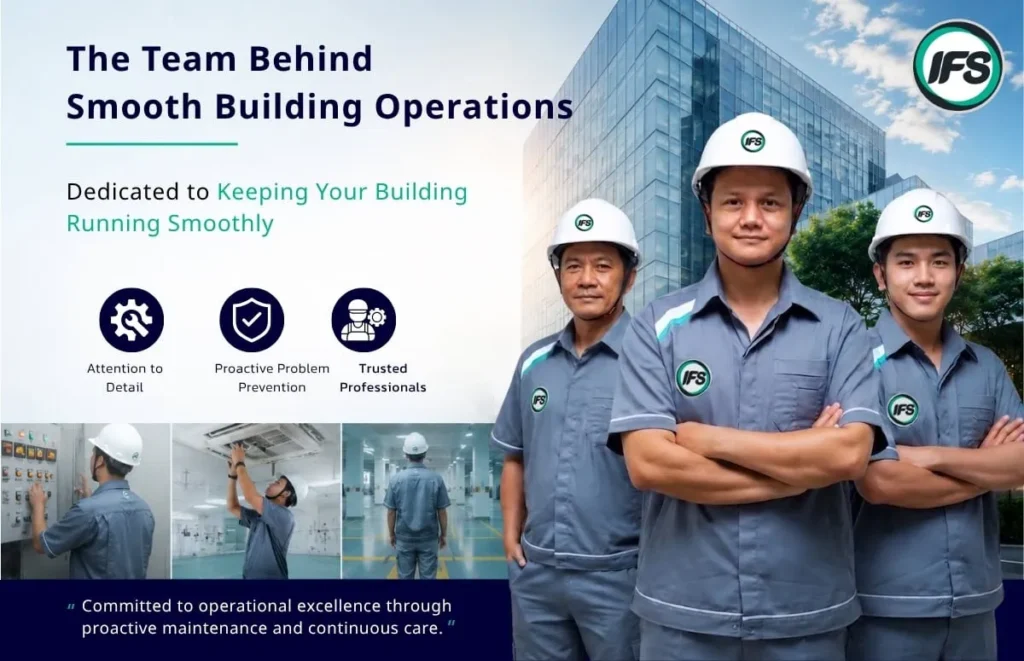
Building maintenance services are one of the key factors that help facilities remain fully operational and ready for continuous use. Whether in office buildings, commercial properties, or shared common areas, effective facility management plays an important role in supporting daily building operations.
Reliable electrical systems, properly functioning air conditioning, and elevators that operate continuously throughout the day do not happen by chance. These systems require ongoing inspections, preparation, and operational oversight before users ever enter the building. Behind every well-functioning facility is a team responsible for monitoring systems, tracking performance, and coordinating operations continuously.
Many aspects of a building that occupants consider “normal” are actually the result of continuous building maintenance services and the coordinated efforts of multiple teams working together to support uninterrupted operations.

Building Maintenance Services involve more than repairs
In buildings with a large number of occupants, many issues cannot simply wait until a failure occurs before action is taken. Once a building system begins to malfunction during active operations, the impact may extend far beyond a single area and affect multiple departments, workspaces, and occupants simultaneously.
In many situations, problems within building systems do not remain isolated. Instead, they can quickly disrupt workplace functionality and operational continuity across several areas within the same property.
For IFS Group, building maintenance services therefore extend beyond equipment repairs. The scope of facility management includes system inspections, workspace support, and operational coordination to help manage issues that may affect building usage and daily operations.
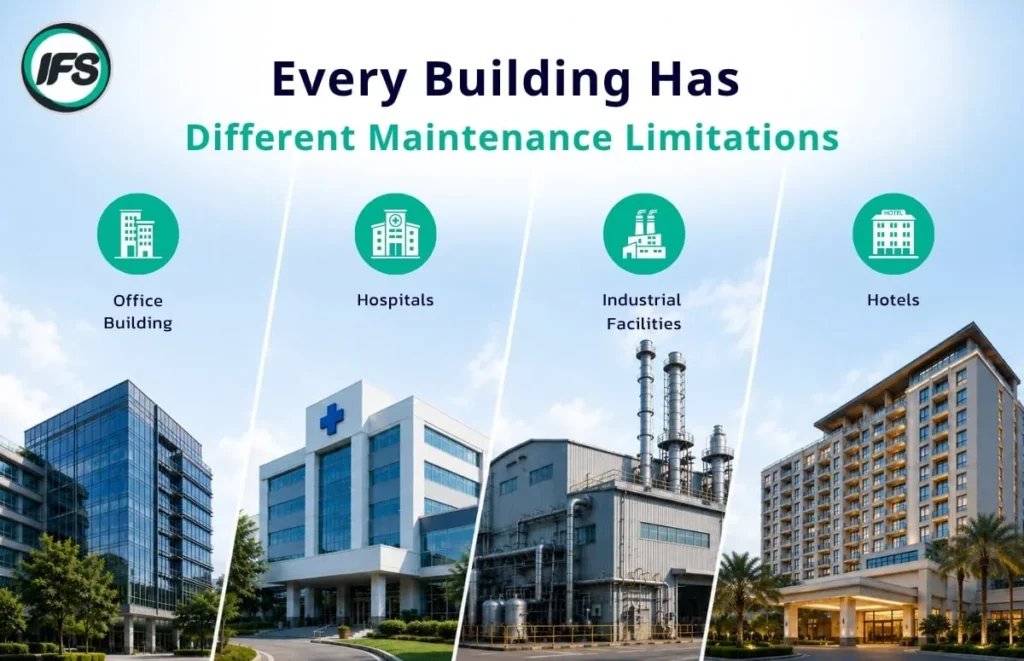
Every building has different maintenance limitations
Every building operates differently depending on its usage patterns and operational requirements. Some properties experience heavy occupancy from early morning, while others host continuous meetings throughout the day. Certain facilities may even operate around the clock with 24-hour occupancy.
These operational limitations mean that maintenance activities – including repairs, system inspections, or work within shared areas – cannot always begin immediately, even when the issue appears minor. If maintenance work is scheduled at the wrong time, it may disrupt workspace usage and affect multiple departments simultaneously.
In practice, many building maintenance processes also require coordination among several parties, including building occupants, engineering teams, facility supervisors, and other related stakeholders within the property.
IFS Group therefore places strong emphasis on planning maintenance operations according to the operational characteristics of each building. This includes pre-access coordination, maintenance prioritization, and selecting appropriate service windows to minimize disruption to occupants and business operations.
Small operational details can have a greater impact than expected
In buildings with high occupancy, the readiness of facility systems and shared spaces directly affects workplace functionality, operational continuity, and the overall user experience.
IFS Group understands that many operational disruptions often begin with seemingly small details that can affect multiple areas simultaneously, such as:
- Inappropriate indoor temperatures that affect workplace comfort and meeting environments throughout the day.
- Elevators that become unavailable during peak hours, leading to delays and congestion across multiple floors.
- Maintenance work conducted in shared spaces or meeting rooms during unsuitable periods, disrupting several departments at once.
- Localized technical issues that escalate quickly and affect multiple organizations operating within the same building.
For this reason, IFS Group continuously monitors facility readiness and building systems to help reduce the likelihood that minor operational issues will escalate into larger disruptions.
Building Maintenance Services help keep facilities operational every day
Effective building maintenance services involve more than simply ensuring that systems function normally. They also include managing workspaces and coordinating operations in ways that align with each organization’s operational requirements.
Many operational details within a building may go unnoticed by occupants, yet they significantly affect workplace atmosphere, continuity of operations, and the overall efficiency of shared spaces.
As a result, successful facility management requires a deep understanding of each building’s operational limitations, along with ongoing communication and coordination among all related parties to minimize disruption.
If your organization is looking for a structured approach to building maintenance services and facility management, you can learn more about IFS Group’s technical engineering and facility management solutions through our service pages.
Frequently Asked Questions about Building Maintenance Services
Q:Why do operational buildings require continuous maintenance services?
A: Because building systems and shared spaces directly affect daily operations and occupant usage. If operational issues occur during the day, they may disrupt multiple departments or areas simultaneously.
Q: Do building maintenance services involve more than repairs?
A: Yes. Building maintenance services include not only repairing damaged equipment, but also operational planning, inspections, coordination, and workspace management that align with building usage requirements.
Q: Why does each building require a different maintenance approach?
A: Each property has unique operational conditions, occupancy patterns, and scheduling limitations. Some buildings experience continuous usage throughout the day, requiring maintenance plans tailored to each organization’s operational environment.
Q: How can small operational issues affect building functionality?
A: Issues such as unstable indoor temperatures, elevator downtime, or maintenance work conducted at inappropriate times may disrupt workplace productivity and shared facility usage.
Q: Why are planning and coordination important in building maintenance services?
A: Many maintenance activities require coordination among occupants, engineering teams, and operational stakeholders to ensure that maintenance work can proceed without disrupting business operations or workspace usage.