TERMITE CONTROL SERVICES
Termites are a major risk factor that can directly affect property, building structures, and an organization’s safety standards. Without systematic management, termite infestations can lead to accumulated structural damage, increasing repair costs, operational disruptions, and long-term impacts on an organization’s reputation.
IFS provides professional pest control services for organizations, with more than 40 years of experience serving businesses across multiple industries. Our services operate under internationally recognized standards, supported by structured operational systems, clear reporting, and verifiable documentation. This enables organizations to ensure that termite control measures align with quality, safety, and sustainable risk management requirements.
IFS is pleased to provide consultation through our team of specialists to evaluate the most appropriate approach before service implementation.
TERMITES
Termites are insects that can cause long-term structural damage to buildings. They often attack from within structures and may not show clear signs during the early stages. Without systematic control measures, termite damage can spread and lead to increased maintenance costs in the future.
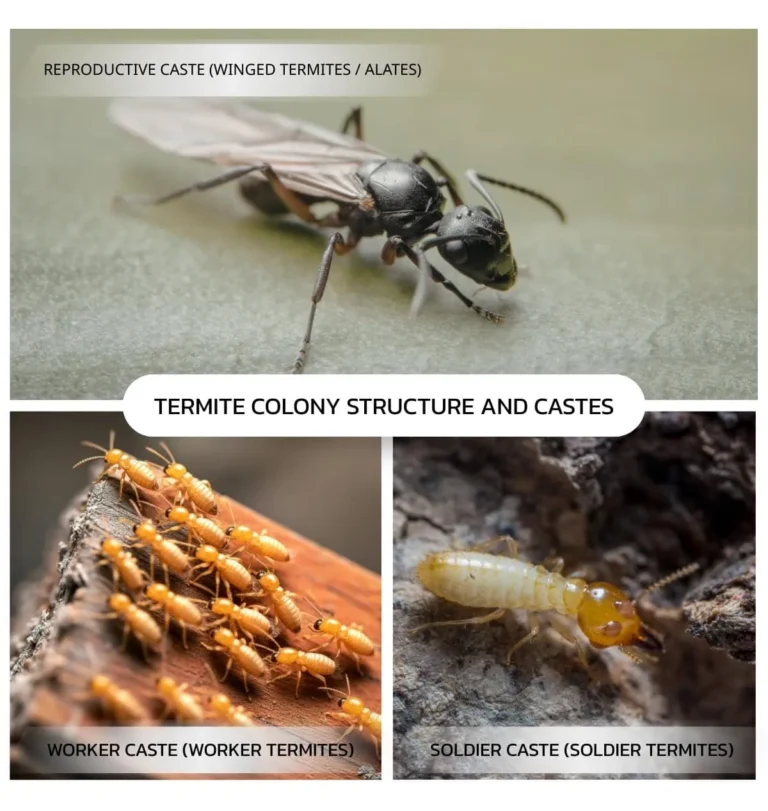
Termite Colony Structure and Castes
Termites live in colonies with clearly defined roles among different castes. Understanding this structure helps analyse distribution patterns and determine effective control strategies.
Reproductive caste (Alates / winged termites)
Responsible for colony expansion. When environmental conditions are suitable, they leave the nest to establish new colonies.
Worker caste
Responsible for searching for food, constructing tunnels, and maintaining the nest. This group is primarily responsible for structural damage to buildings.
Soldier caste
Responsible for protecting the colony, characterized by distinctive head structures and strong mandibles.
Termite Life Cycle and Food Sources
The termite life cycle begins with eggs, develops into larvae, and eventually forms different castes within the colony. Worker termites are the primary group responsible for foraging and expanding tunnels within buildings.
Types of Termites by Habitat
Wood-Dwelling Termites
Drywood termites
Typically found in wood that has been in use for long periods and has low moisture levels. Damage occurs inside the wood, leaving a thin outer surface intact.
Dampwood termites
Found in wood with high moisture levels, such as living trees or wood that has deteriorated due to accumulated moisture.
Soil-Dwelling Termites
Subterranean termites
Primarily live and build nests underground and are the group that causes the most severe damage to buildings.
Mound-building termites
Construct medium to large nests above ground.
Small above-ground nesting termites
Commonly found in trees, utility poles, or building structures.
Termite Food Sources
Termites primarily consume materials containing cellulose. Microorganisms in their digestive systems help break down cellulose into energy. Common food sources include:
- Wood and wood-based materials.
- Soil and humus.
- Leaf litter and plant debris.
- Lichens and moss.
Most termites feed on cellulose-based materials. Microorganisms in their digestive systems help convert cellulose into usable energy. Termites that infest buildings can also adapt to consume various materials that contain cellulose components.
IFS TERMITE PEST CONTROL SERVICE PROCESS
IFS operates under a structured pest control approach that ensures traceability and compliance with building standards and organizational audit requirements. The service process includes the following steps:
Site Inspection
and Risk Assessment.

Analysis
and Service Planning.

Implementation
of Control Measures.


Inspection
and Reporting.

Long-Term
Prevention Planning.
Site Inspection and Risk Assessment.
Analysis and Service Planning.
Implementation of Control Measures.
Inspection and Reporting.
Long-Term Prevention Planning.
Key Advantages of IFS Termite Pest Control Services
IFS emphasizes systematic analysis of termite behaviour to prevent infestation spread, protect building structures, and support long-term maintenance planning for organizations.
Key service features include:
- Customized service design for corporate clients, including targeted chemical treatments, dust formulations, termite baiting systems for colony elimination, and chemical injection into subfloor piping systems, soil around building perimeters, and high-risk areas to create a protective barrier between soil and building structures after construction.
- Transparent reporting and traceable service follow-up.
- Operational teams trained in pest control and building service standards.
- Control methods aligned with workplace safety standards.
- Services suitable for office buildings, industrial facilities, hospitals, and commercial projects.
Warning Signs of Potential Termite Activity
Organizations should be aware of the following signs that may indicate termite risk within buildings:
- Mud tubes or termite trails found along columns, beams, or walls.
- Wood-based materials such as skirting boards, door frames, or furniture showing swelling, decay, or hollow sounds.
- Doors, windows, or wooden structures becoming difficult to open or close due to internal structural changes.
- Discarded termite wings found inside buildings or operational areas, indicating colony expansion.
If these signs are detected, organizations are advised to conduct inspections and use termite pest control services to assess structural risks and implement systematic control measures.
FREQUENTLY ASKED QUESTIONS ABOUT TERMITE PEST CONTROL SERVICES
When should organizations start termite pest control services?
Preventive measures are recommended before damage occurs to reduce long-term costs.
Will the service affect building operations?
IFS can plan service schedules to minimize disruption to activities within the building.
Can service reports be prepared for audits or inspections?
Yes. IFS can provide documentation and reports according to organizational requirements.
Are the chemicals used safe?
IFS selects chemicals and treatment methods that comply with safety standards.
Is long-term monitoring available?
Yes. Periodic inspections and continuous monitoring systems are provided.
What types of buildings are supported?
Office buildings, factories, hospitals, and commercial facilities.
How does termite control help reduce long-term costs?
It helps prevent structural damage and reduces repair and maintenance expenses.
Can service plans and budgets be proposed in advance?
IFS can prepare proposals and service plans to support organizational decision-making.
How are termite pest control service fees determined?
Costs depend on building type, area size, infestation level, and the appropriate control approach. A site assessment is conducted before proposing a service plan and budget.
Why should organizations choose IFS for termite pest control services?
IFS has extensive industry experience and a deep understanding of pest control techniques, building structures, and corporate procurement processes. We design termite control programs aligned with operational needs and provide structured reporting and monitoring systems that support effective organizational risk management.
Request for a Free Consultation and Site Assessment by Our Experts
IFS provides professional pest prevention and control services and will recommend a control plan suited to your facility and risk profile.
IFS provides professional pest prevention and control services and will recommend a control plan suited to your facility and risk profile.