When electrical systems fail, air conditioning stops, or elevators become unavailable, these are not just technical issues. They represent operational risks that immediately affect productivity, safety, and organizational reputation.
Technical and Engineering Services focus on managing and controlling building systems such as electrical, HVAC, and safety systems to ensure continuous, safe, and disruption-free operations.
In essence, this is not only about fixing problems after they occur. It is about always keeping all building systems fully operational, often without users noticing any issues.
This article explains:
- What these services are.
- Which systems they cover.
- How they impact organizational performance.
What Are Technical and Engineering Services?
Technical and Engineering Services refer to the management and maintenance of all building systems to ensure they operate continuously in line with defined standards.
In practice, these services go beyond reactive repairs. They involve ongoing system management, structured into three key components:
- Inspection: Regular system and equipment checks, to identify abnormalities or early signs of deterioration before they develop into major issues.
- Maintenance: Ongoing care, repair, and optimization to ensure systems remain operational, including both preventive and corrective maintenance.
- Planning: Analysis of operational data and development of long-term maintenance strategies to control costs, reduce risk, and extend equipment lifespan.
Effective building maintenance enables organizations to manage risks proactively rather than waiting for issues to occur.
“Organizations that manage buildings effectively do not wait for systems to fail before taking action.”
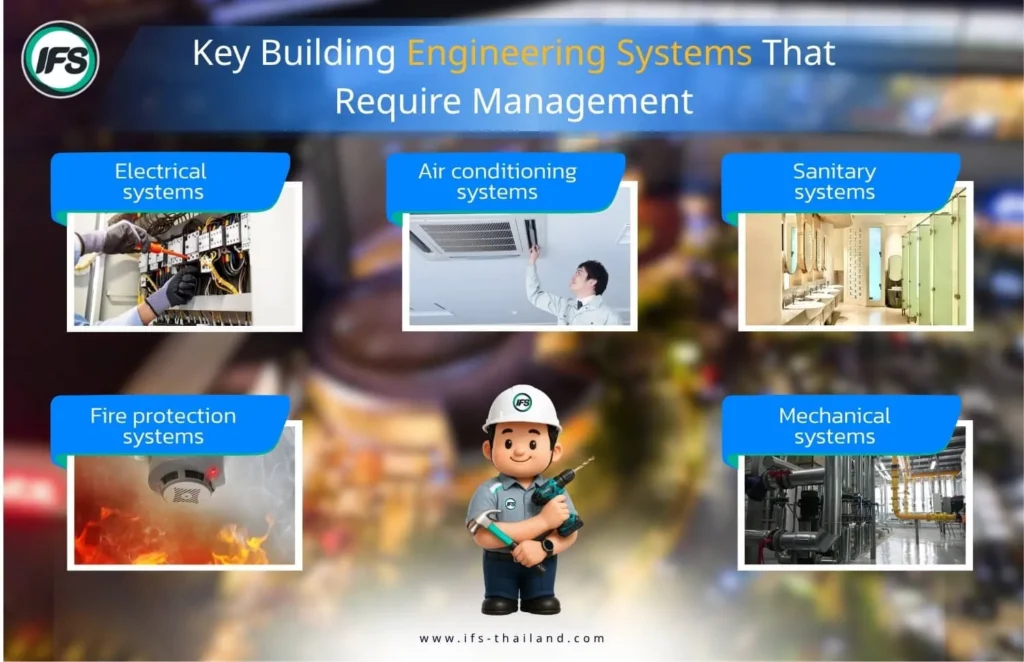
Key Building Engineering Systems That Require Management
Building engineering systems do not operate independently. They are interconnected, and failure in one system can quickly impact others and disrupt overall operations.
Key systems include:
- Electrical Systems: Provide and control power for lighting, IT systems, machinery, and office equipment. Failures can directly interrupt operations.
- HVAC Systems: Control temperature, humidity, and air quality, affecting working conditions, employee productivity, and energy efficiency.
- Mechanical Systems: Include equipment such as pumps, water circulation systems, and pressure systems that support building operations.
- Plumbing Systems: Manage water supply, wastewater, and drainage, directly impacting hygiene and facility standards.
- Fire Protection Systems: Include smoke detection, alarm systems, and fire suppression systems that must be regularly tested to ensure readiness.
- Elevators and Escalators: Support movement within buildings, especially in high-rise or high-traffic environments.
Managing these systems is not just routine maintenance. It is a structured approach to risk management that ensures continuous and efficient operations.
What happens without proper Building System Management?
Most building issues do not occur suddenly. They result from gradual deterioration that is not properly managed.
Without a clear maintenance plan, organizations may experience:
- Increased energy costs due to inefficient systems.
- Faster equipment deterioration.
- Unexpected system downtime.
- Higher safety risks.
Examples include:
- HVAC systems are not cleaned regularly, leading to higher workload and faster wear.
- Electrical systems not inspected, increasing the risk of power fluctuations and equipment damage.
- Fire protection systems not tested, resulting in failure during emergencies.
The real impact is not just repairing costs, but the disruption to business operations.
“The true cost is not repairing expenses, but the time your business cannot operate.”
Scope of Technical and Engineering Services
These services require both engineering expertise and structured management, with the goal of controlling building system risks and ensuring continuous operation.
Core activities include:
- Routine Inspection: Scheduled checks to identify abnormalities and potential risks, supported by structured reporting.
- Preventive Maintenance: Planned activities such as cleaning, calibration, and parts replacement to prevent failures and extend equipment life.
- Corrective Maintenance: Rapid diagnosis and resolution of issues to minimize operational disruption, with proper documentation.
- Performance Analysis: Use of operational data to identify trends, improve efficiency, and support decision-making.
- Maintenance Planning: Medium- and long-term planning to manage system lifecycle, budget, and risk.
Operational checklist:
- Preventive maintenance plan covering all critical systems.
- Clearly defined inspection schedules.
- Systematic maintenance and repair records.
- Data analysis for equipment deterioration trends.
- Practical emergency response plans.
- Continuous review and improvement.
How Building Maintenance reduces Long-Term Costs
Many organizations see maintenance as a cost. In reality, it is a tool for cost control.
With proper system management:
- Equipment operates efficiently, reducing energy consumption.
- Emergency repairs decrease, lowering major expenses.
- Equipment lifespan increases, reducing replacement costs.
“Effective maintenance is a way to manage business uncertainty.”
Which Types of Buildings Require These Services?
Buildings with complex systems and continuous usage typically require technical and engineering services.
Examples include:
- Large office buildings.
- Industrial facilities.
- Hospitals.
- Shopping centres.
- High-rise buildings.
These buildings carry higher operational risk, where system failures can immediately impact business continuity.
However, all buildings carry some level of risk. The difference lies in how that risk is managed.
How to Select a Technical and Engineering Service Provider
Selecting a provider should focus on business continuity rather than price alone.
Key considerations include:
- Qualified engineering team with practical expertise.
- Relevant experience in managing complex systems.
- Clear operational standards such as preventive maintenance plans and procedures.
- Reporting and data analysis capabilities to support decision-making.
- Integrated services covering inspection, maintenance, troubleshooting, and planning.
Choosing the right provider means selecting a partner that supports long-term operational stability.
How IFS Group Supports Building Management
IFS Group provides comprehensive building management services backed by over 40 years of experience. Their services include system assessment, routine inspections, preventive maintenance planning, and long-term system management.
Key strengths include:
- Experienced engineers and technicians across various building systems.
- Preventive maintenance programs covering critical systems.
- Scheduled inspections to reduce failure risks.
- Structured short- and long-term planning.
- Fully integrated service delivery.
Organizations can ensure continuous system performance, reduced operational risk, and long-term stability with expert support.
Conclusion: Why Technical and Engineering Services Matter
Effective building management is not about fixing isolated issues. It is about ensuring all engineering systems operate continuously without disrupting business operations.
All major systems are interconnected. A failure in one system can impact others and lead to higher costs or unexpected downtime.
A structured approach that includes inspections, preventive maintenance, and long-term planning helps control risks, reduce unnecessary costs, and extend equipment life.
Selecting the right service provider is not just outsourcing. It is forming a partnership that supports consistent and reliable operations.
The goal is not only to avoid problems, but to ensure all systems consistently support business operations under any conditions.
FAQ – Technical and Engineering Services
Q: How are these services different from general repairs?
General repairs address problems after they occur. Technical and engineering services focus on prevention, control, and long-term planning.
Q: Which systems require frequent maintenance?
HVAC, electrical, and fire protection systems, as they directly impact safety and operations.
Q: Do office buildings need maintenance teams?
Yes, especially those with multiple integrated systems, to ensure operational continuity.
Q: Are these services required for all building types?
Buildings with complex or continuous operations typically require them. Smaller buildings still need appropriate maintenance planning.
Q: How should organizations choose a provider?
They should select providers with expertise, experience, clear standards, and the ability to deliver continuous system management.
If your organization is looking to improve building management efficiency, reduce risk, and control long-term costs, consider the Technical and Engineering Services offered by IFS Group. Click