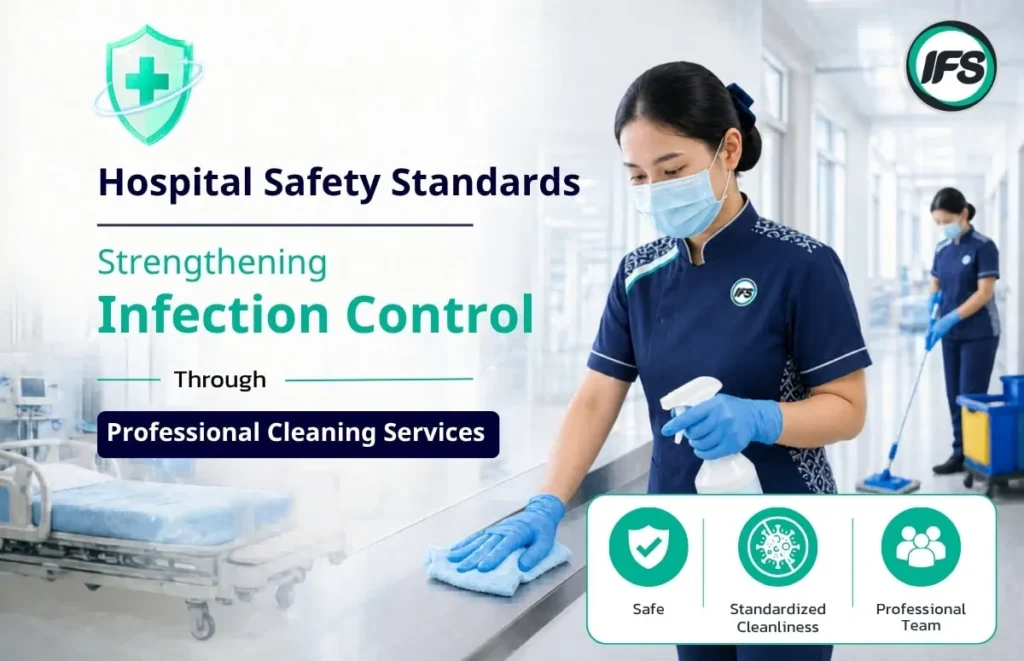
Hospital Infection Control is one of the most critical components of healthcare safety standards. Hospitals today face increasing expectations for patient safety, hygiene, and environmental risk management. Under stricter operational and regulatory standards, cleaning services directly influence infection prevention performance, especially in high-touch areas, shared spaces, restrooms, and infectious waste management.
To maintain consistent infection prevention standards, healthcare facilities must implement structured cleaning procedures, quality monitoring systems, and operational controls that reduce contamination risks across all service areas.
This article explains how professional hospital cleaning services strengthen Hospital Infection Control through standardized workflows, on-site quality management, specialized procedures, and cleaning technologies that support long-term healthcare safety.
Infection Control Systems: A Core Element of Hospital Safety
Hospital Infection Control systems play a critical role in maintaining healthcare safety standards because they directly affect the environment that patients, healthcare professionals, staff, and visitors interact with every day.
Effective infection prevention requires coordinated operations across multiple functions, including:
- Scheduled environmental cleaning.
- Proper use of cleaning equipment and disinfectants.
- Regulated waste management procedures.
- Defined operational workflows.
- Continuous quality inspection and monitoring.
When any part of the process becomes inconsistent, infection risks immediately increase. Missed cleaning cycles, improper disinfectant selection, or inadequate monitoring can reduce the effectiveness of the entire infection prevention system.
As a result, environmental cleaning is not simply a support service. It is the operational mechanism that turns healthcare safety policies into practical, measurable actions throughout the hospital.
Maintaining consistency in this area directly supports:
- Healthcare service quality.
- Patient and staff safety.
- Long-term operational reliability.
- Compliance with hospital hygiene standards.
Organizations that prioritize Hospital Infection Control through structured cleaning operations can reduce environmental risks more effectively while supporting safer healthcare experiences.
The difference between Cleaning Services and Infection Control
Many organizations still view cleaning services and infection control as the same function. In practice, however, they serve different operational purposes and produce significantly different outcomes.
| Comparison Area | General Cleaning | Infection Control |
| Organizational Role | Environmental support service | Part of healthcare risk management and service quality |
| Primary Objective | Maintain overall cleanliness | Reduce contamination and infection transmission in high-touch areas |
| Operational Continuity | Follow standard cleaning schedules | Maintain cleaning frequency based on infection risk levels |
| Quality Control | Visual cleanliness and orderliness | Inspection, documentation, monitoring, and risk reduction analysis |
| Impact of Incomplete Operations | Areas appear unclean | Immediate increase in infection transmission risk |
General cleaning primarily focuses on removing visible dirt and maintaining usable environments.
Hospital Infection Control focuses on reducing contamination and infection transmission through clearly defined operational procedures, including:
- Cleaning frequency schedules.
- Area sequencing protocols.
- Dedicated equipment usage.
- Approved disinfectant applications.
- Operational inspections and documentation.
This distinction is particularly important in healthcare environments where operational consistency directly affects patient safety outcomes.
Hospital Cleaning Services: How IFS Strengthens Infection Control Standards
IFS Group designs hospital cleaning services specifically to support Hospital Infection Control across all high-risk operational areas. The service structure integrates cleaning workflows, environmental hygiene management, waste handling, and quality monitoring into a coordinated system.
High-Touch Surface and Shared Area Control
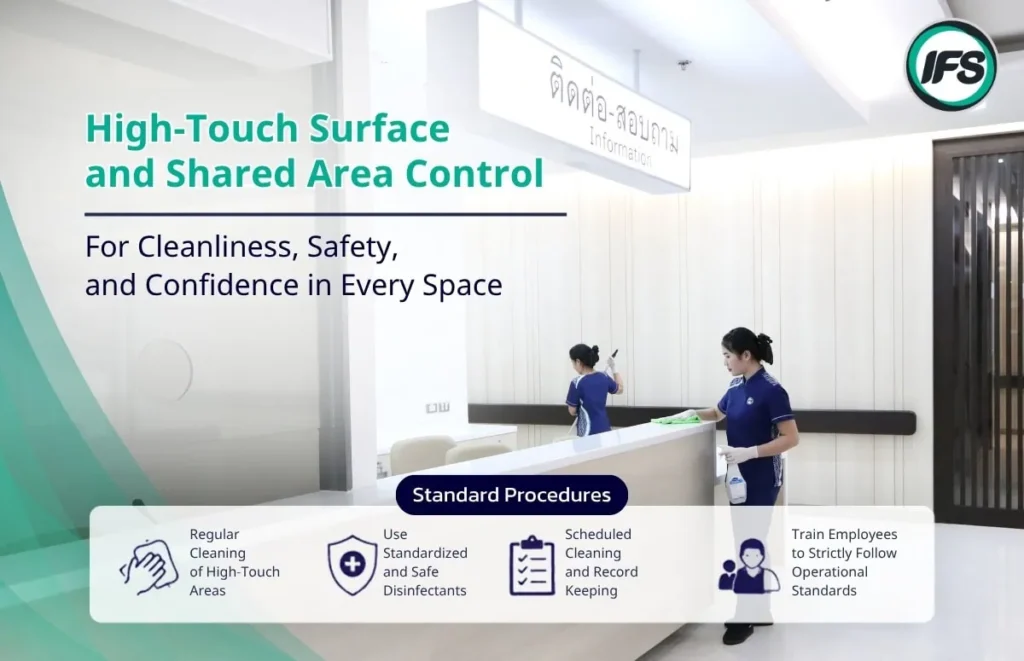
In hospitals, daily cleaning operations have a direct impact on infection prevention because high-touch surfaces such as door handles, bed rails, counters, and hallways remain in constant use throughout the day.
IFS Group treats these operational areas as controlled infection prevention zones rather than routine housekeeping tasks.
To reduce contamination risks, IFS implements:
- Structured cleaning schedules.
- Defined area sequencing.
- Zone-based equipment separation.
- Operational inspection checklists.
- Cleaning activity documentation.
Equipment is assigned separately by zone to prevent cross-contamination between operational areas.
In addition, every cleaning cycle is recorded and monitored, allowing healthcare facilities to verify:
- Which areas have been serviced.
- Whether cleaning schedules were completed.
- Whether procedures aligned with operational standards.
As a result, organizations receive more than visible cleanliness. They gain measurable infection risk control across critical contact points.
Daily environmental cleaning serves as the operational foundation of Hospital Infection Control. When this process remains stable and consistent, the entire infection prevention system performs more effectively.
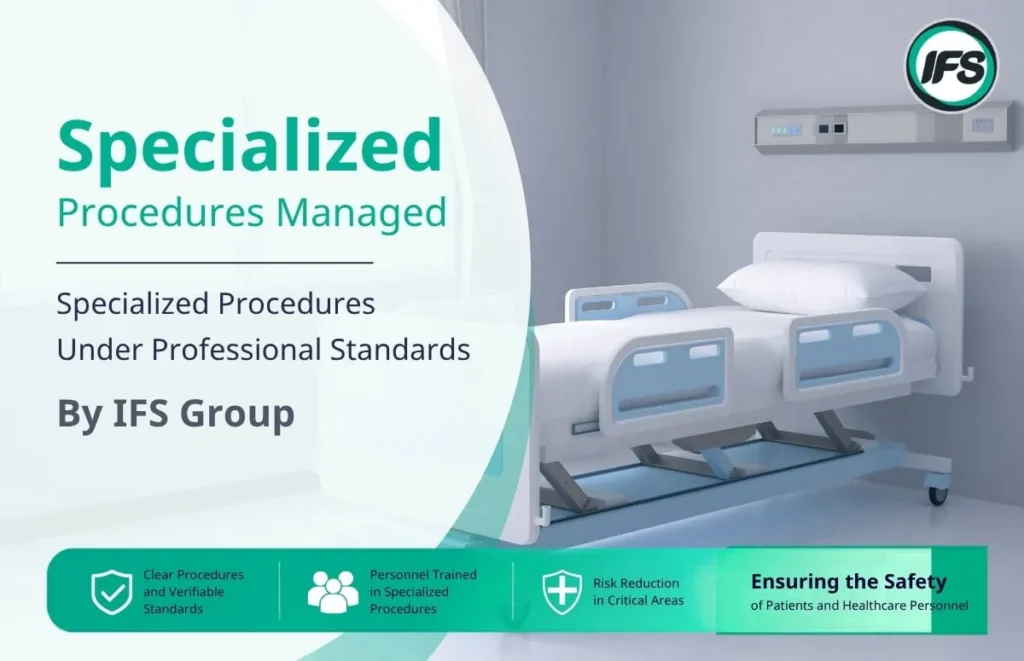
Specialized Procedures Managed by IFS Group
Specialized environments such as operating rooms and cleanrooms require stricter cleaning protocols than standard healthcare areas.
IFS teams follow clearly defined workflows designed specifically for controlled healthcare environments.
Operational procedures include:
- Removing waste and contaminants before cleaning begins.
- Cleaning according to directional workflows.
- Moving from cleaner zones toward higher-risk areas.
- Applying disinfectants based on surface requirements.
- Allowing proper disinfectant contact time before proceeding.
Equipment used in specialized environments is monitored carefully and replaced according to defined operational intervals to minimize contamination risks associated with repeated usage.
After cleaning procedures are completed, teams conduct additional inspections and document all operational activities for verification and compliance tracking.
Personnel assigned to these environments receive specialized training and follow standardized operational instructions consistently.
Healthcare facilities therefore receive more than clean environments. They receive verifiable operational processes designed to reduce risks in mission-critical healthcare areas.
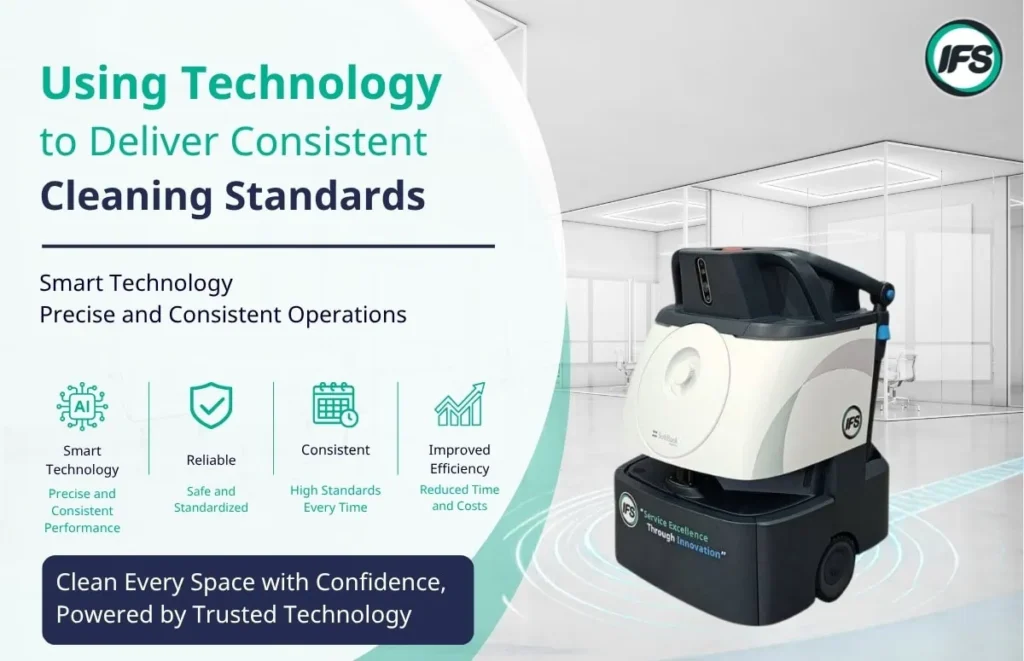
Using technology to maintain consistent Cleaning Standards
High-traffic areas such as hospital corridors and public circulation zones experience continuous usage throughout the day.
In some situations, manual cleaning alone may not maintain consistent cleaning frequency during peak operational periods.
To improve operational continuity, IFS integrates robotic cleaning technology into selected healthcare environments.
Cleaning robots support Hospital Infection Control by:
- Following predefined routes accurately.
- Maintaining scheduled cleaning cycles consistently.
- Reducing operational variation in repetitive tasks.
- Supporting continuous environmental hygiene standards.
The role of cleaning robots is not to replace personnel. Instead, technology supports tasks that require high operational consistency while allowing staff to focus on areas requiring specialized judgment and expertise.
As a result, heavily used hospital areas maintain more stable cleanliness standards regardless of workforce limitations or operational timing challenges.
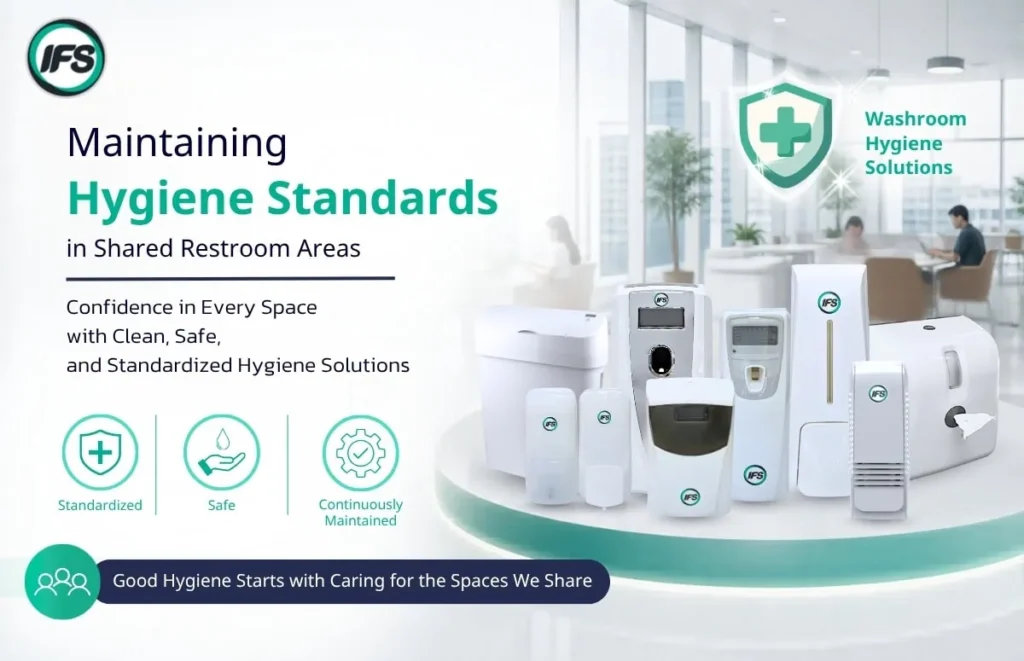
Maintaining Hygiene Standards in Shared Restroom Areas
Restrooms are among the highest-risk shared-use environments in healthcare facilities because they serve large numbers of patients, staff, and visitors throughout the day.
IFS Group therefore manages restroom hygiene through structured environmental sanitation standards rather than basic cleaning alone.
Operational management includes:
- Scheduled restroom cleaning.
- Disinfectant application control.
- Soap and tissue replenishment.
- Inspection of hygiene equipment functionality.
- Waste container management.
Facility equipment such as soap dispensers, hand dryers, and waste bins are maintained in operational condition at all times.
In addition, cleaning products and disinfectants are selected according to the hygiene requirements of each healthcare area.
This approach allows organizations to maintain restrooms that are not only visibly clean but consistently ready for safe public use.
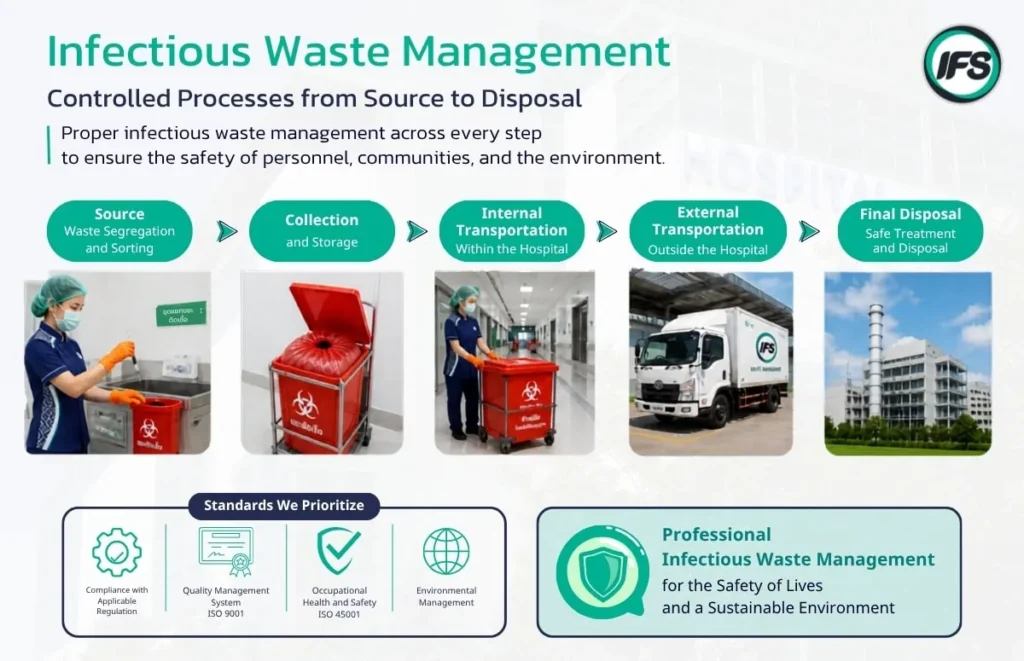
Infectious Waste Management: Controlled Processes from Source to Disposal
IFS Group designs healthcare waste management systems specifically for hospitals and medical facilities.
The system covers:
- General waste.
- Infectious waste.
- Sharps disposal.
- Segregation at source.
- Sealed containment procedures.
- Controlled transportation routes.
Waste handling operations are structured to minimize cross-contamination risks between operational areas.
All processes follow healthcare waste management standards while supporting environmental safety requirements and operational compliance.
Operational monitoring and inspection procedures are also implemented throughout each stage to verify process completion and adherence to safety standards.
As a result, healthcare facilities receive more than compliant waste disposal services. They gain a traceable waste management system that reduces contamination risks and supports long-term environmental responsibility.
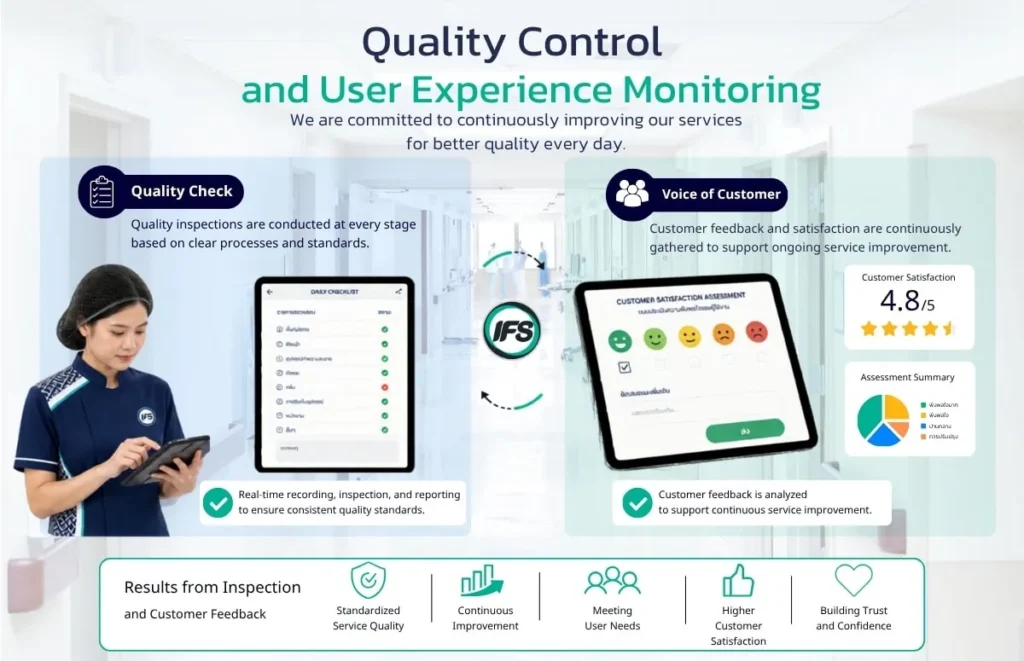
Quality Inspection and User Experience Monitoring
IFS Group extends quality control beyond routine operational supervision.
Daily inspections are conducted using digital monitoring systems that include:
- QR code tracking.
- Digital operational checklists.
- Real-time status reporting.
- Cleaning verification records.
These systems allow organizations to monitor cleaning performance across multiple operational areas in real time.
In addition, IFS collects feedback from facility users through satisfaction assessment systems such as tablets installed in service areas.
Operational data and user feedback are continuously reviewed to improve cleaning performance and align services with actual usage conditions.
This process functions as more than a quality audit system. It serves as a continuous operational improvement framework that supports measurable Hospital Infection Control standards across healthcare environments.
Strengthening Hospital Infection Control begins with Standardized Cleaning Services
Hospital safety standards are not created through policies or manuals alone. They are achieved through consistent operational execution in real healthcare environments.
From managing high-touch surfaces and infectious waste to maintaining continuous cleaning standards in heavily used areas, every operational component must function together under a clearly defined process.
When healthcare cleaning services follow standardized procedures, measurable inspections, and continuous improvement practices, Hospital Infection Control becomes an operational reality rather than a theoretical objective.
For this reason, healthcare organizations should evaluate cleaning service providers based not only on cost, but also on their ability to:
- Maintain operational consistency.
- Support healthcare safety standards.
- Deliver measurable quality control.
- Reduce long-term infection risks.
- Provide transparent operational verification.
By partnering with IFS Group, healthcare facilities gain more than outsourced cleaning services.
They invest in an integrated operational system designed to:
- Reduce infection risks.
- Improve healthcare service quality.
- Strengthen environmental hygiene standards.
- Support sustainable healthcare safety operations.
IFS Group also collaborates with healthcare organizations to develop operational workflows and Work Instructions tailored to each facility’s infection prevention requirements and healthcare safety standards.
FAQ: Hospital Infection Control and Professional Cleaning Services
Q: What is a Hospital Infection Control system?
A: A Hospital Infection Control system consists of operational procedures and monitoring mechanisms designed to reduce contamination and infection transmission within healthcare environments. The system includes workflows, personnel management, environmental hygiene practices, and performance verification.
Q: How do cleaning services support Hospital Infection Control?
A: Professional cleaning services help reduce contamination in high-touch areas through scheduled cleaning cycles, structured workflows, and consistent operational procedures that support infection prevention.
Q: What is the difference between Standard Cleaning and Infection Control Cleaning?
A: Standard cleaning focuses primarily on overall cleanliness. Infection Control cleaning uses structured cleaning schedules, area sequencing protocols, disinfectant management, and operational inspections to reduce infection transmission risks.
Q: Why is quality inspection important in Hospital Cleaning Operations?
A: Quality inspections verify that cleaning procedures are completed according to defined standards. They also provide traceable operational records and support immediate corrective action when inconsistencies occur.
Q: How does technology improve hospital cleaning performance?
A: Digital monitoring systems and robotic cleaning technologies improve operational consistency, support real-time tracking, reduce workforce limitations, and strengthen environmental hygiene management in heavily used healthcare areas.