Many organizations use labor outsourcing services to engage external providers to handle workforce recruitment and labor management instead of managing all employees internally. This approach allows organizations to quickly access a job-ready workforce while reducing the internal burden of human resources management.
This employment model is commonly used in medium and large organizations that require a significant number of personnel, such as production staff, warehouse personnel, administrative staff, receptionists, and front-line service employees. The service provider supplies these personnel to work within the client organization, while the client retains full control over job responsibilities and operational processes based on its internal systems.
As a result, labor outsourcing enables organizations to focus on their core business while maintaining a structured and continuously managed support workforce.
This article explains what labor outsourcing is, the types of roles it supports, its role in business operations, and why many organizations choose this type of service.
What Is Labor Outsourcing?
Labor outsourcing is a service model in which a provider supplies personnel to work within a client organization. The provider is responsible for recruitment, hiring, employee benefits, and workforce management.
In simple terms, organizations can access a job-ready team without managing the entire hiring process themselves.
In practice, the provider manages the workforce lifecycle from candidate screening and initial training to work scheduling, performance monitoring, and compliance with labor regulations. This includes employment contracts, legally compliant wage payments, social security contributions, and labor-related documentation.
Labor law compliance is a critical factor, especially for large organizations that must comply with multiple regulations. If it is not managed properly, this can lead to legal risks or labor disputes. Working with a labor outsourcing provider helps ensure that these processes are handled correctly and systematically by experienced professionals.
To provide a clearer comparison:
Direct Hiring:
- The organization manages recruitment independently.
- Responsible for employment contracts and employee benefits.
- Handles labor law compliance and documentation.
Labor Outsourcing:
- The provider supplies personnel.
- Includes workforce management, benefits administration, and documentation.
- The provider ensures compliance with labor laws.
- The organization can focus more on its core business.
In practice, organizations can request personnel across a wide range of roles depending on business needs and operational periods. Some organizations require production or warehouse staff, while others need administrative personnel, receptionists, or front-line service staff. Providers must be able to supply personnel across various roles rather than being limited to a single job category.
What Positions Can Labor Outsourcing Providers Supply?
Labor outsourcing providers can supply personnel across a wide range of roles and are commonly used in production, warehouse and logistics operations, office administration, and front-line service roles. Their primary role is to provide personnel who work within client organizations and follow the organization’s systems and processes.
Common positions include:
Production Staff:
Many industrial organizations use labor outsourcing services to source production staff who can begin work immediately on production lines. The provider is responsible for recruitment, hiring, and structured workforce management.
Warehouse and Logistics Personnel:
Warehouse roles such as packing staff, inventory staff, and material handling personnel are commonly outsourced because they often require a large workforce and flexibility based on workload volume.
Administrative and Office Staff:
Organizations may use labor outsourcing services to source administrative staff, data entry staff, and receptionists to support internal operations.
Front-Line Service Staff:
Service businesses such as customer service centers, service points, and retail operations may outsource front-line personnel who interact directly with customers.
What Role Does Labor Outsourcing Play in Business Operations?
The primary role of labor outsourcing is to ensure that organizations have a job-ready workforce aligned with operational needs at different times, especially for functions that require a large workforce or involve fluctuating workloads.
When organizations can access labor quickly, operations across departments such as production, warehousing, and administrative support can continue without disruption.
Key roles include:
- Enabling rapid workforce deployment.
- Supporting labor-intensive operations.
- Supporting core business functions.
- Allowing workforce scalability in line with business growth.
The purpose of this service is not to replace the organization’s role, but to ensure that the workforce system remains stable and continuous.
“Organizations with effective workforce strategies can expand operations and maintain business continuity.”
Why Do Organizations Choose Labor Outsourcing?
Although many organizations can recruit employees independently, managing a large workforce requires time, resources, and complex systems.
As a result, many organizations choose to work with labor outsourcing providers who specialize in workforce management and can handle recruitment and staffing processes more efficiently.
Common reasons include:
- Reducing the workload of HR departments.
- Gaining faster access to labor pools.
- Adjusting workforce size based on demand.
- Leveraging professional workforce management expertise.
- Ensuring compliance with labor laws.
Labor law compliance is another key consideration. Employment involves multiple requirements such as contracts, wage compliance, social security contributions, and documentation. Managing these internally can be complex and may increase legal risk.
Labor outsourcing providers help ensure that all processes comply with legal requirements, allowing organizations to operate confidently without managing every detail themselves.
การเหล่านี้ให้เป็นไปตามข้อกำหนดทางกฎหมาย ช่วยให้องค์กรสามารถใช้แรงงานได้อย่างถูกต้องตามกฎหมายโดยไม่ต้องบริหารจัดการรายละเอียดทั้งหมดด้วยตัวเอง
How Does Labor Outsourcing Help Manage Costs and Risks?
Cost control and risk management are important considerations for organizations.
Recruitment and direct hiring involve multiple cost components, including job advertising, candidate screening, training, and administrative management.
With labor outsourcing, many of these costs are incorporated into the provider’s service model, allowing organizations to plan workforce budgets more effectively.
Labor law risk is another concern, including:
- Employment contract preparation.
- Wage and benefits compliance.
- Social security management.
- Labor documentation management.
The provider manages these processes in accordance with legal requirements, helping reduce the risk of administrative errors and potential labor disputes.
What Does IFS Group’s Labor Outsourcing Service Cover?
IFS Group is a labor outsourcing provider with more than 40 years of experience in workforce management for large organizations across multiple industries.
This experience enables the company to implement standardized workforce management systems supported by a team of specialists who understand client requirements.
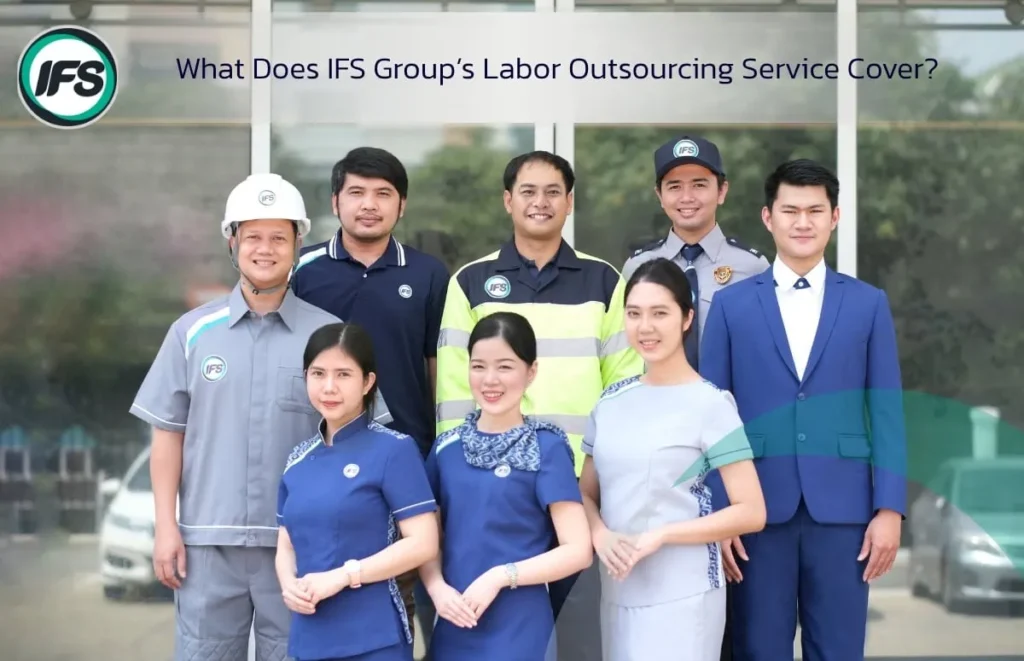
The company can supply personnel across a variety of roles, including:
- Production staff.
- Warehouse personnel.
- Administrative staff.
- Office support staff.
These roles are only common examples. In practice, the company can provide personnel based on client needs across a wide range of positions, including operational, support, and specialized roles, depending on the nature of the business.
The company manages recruitment, hiring, workforce administration, and labor law compliance in a structured manner, ensuring efficient workforce utilization and full regulatory compliance.
Summary: Why Is Labor Outsourcing Important for Organizations?
Labor outsourcing is a workforce solution that enables organizations to maintain a job-ready workforce aligned with business needs. The provider manages recruitment, hiring, workforce administration, and compliance with labor laws.
For organizations that require a large workforce, such as in production, warehouse operations, or administrative support, this approach enables faster hiring, workforce flexibility, and reduced internal management burden.
In addition, working with a professional provider helps organizations control costs, improve budget planning, and reduce legal risks.
For these reasons, many organizations use labor outsourcing as a strategic workforce management approach to ensure business continuity while focusing on core business development.
Frequently Asked Questions About Labor Outsourcing
What is labor outsourcing?
Labor outsourcing is a service in which provider supplies personnel to an organization and manages recruitment, hiring, and workforce administration, while employees work within the client organization.
Q:What types of businesses use labor outsourcing?
It is suitable for all types of organizations, including manufacturing, logistics, office environments, and service businesses, especially those that require a large workforce or experience fluctuating workloads.
Q: Can organizations still control employee work?
Yes. Organizations can define job responsibilities, workflows, and performance standards according to their internal systems.
Q:How does labor outsourcing reduce legal risk?
The provider manages employment contracts, wage compliance, social security contributions, and labor documentation, helping reduce legal and compliance risks.
Q:What does the provider manage?
The provider manages recruitment, hiring, employee benefits, documentation, and compliance with labor laws.
For more information about labor outsourcing and business support services, please visit the company’s service page. Click