Workplace safety rules are a structured set of guidelines established by an organization to ensure that all operations are carried out safely, reduce the risk of accidents, and create a standardized safety framework that every employee must strictly follow. These rules are not simply written policies but a practical safety system that must be consistently applied in daily operations.
In organizations operating across offices, industrial facilities, and various workplaces with diverse tools, equipment, and environments, risks can arise at any time. These risks range from chemical handling and electrical work to working at heights and material handling. Without a clearly defined risk control system, even a single incident can significantly impact employees, the organization, and its stakeholders.
This article presents 10 essential workplace safety rules that every employee must follow, aligned with safety standards used to manage risks in real operational environments.
“Safety rules only have value when they are consistently practiced on site every day.”
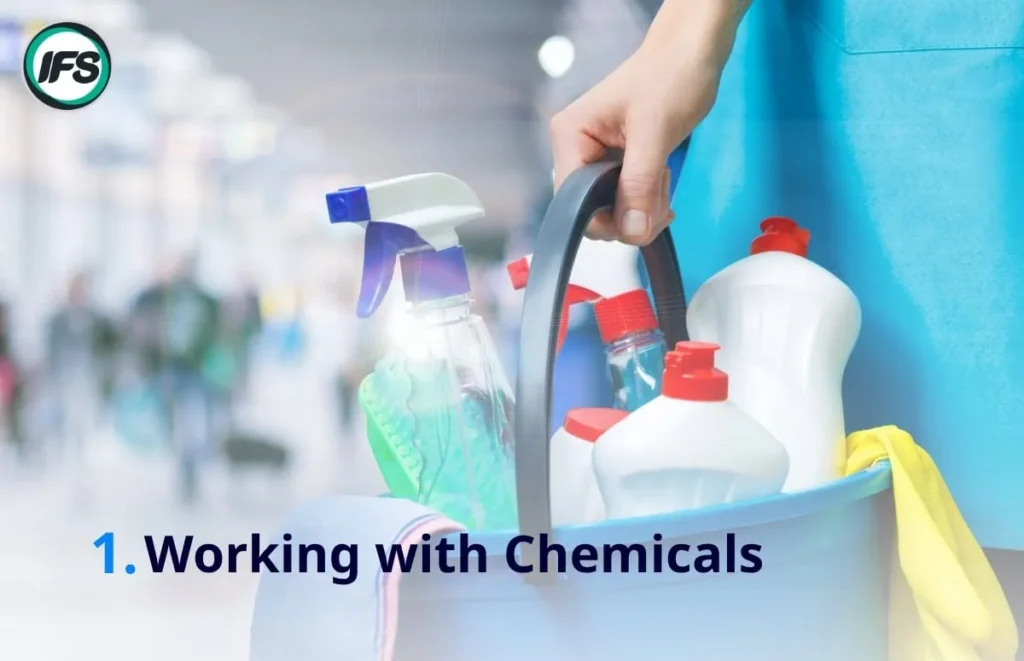
1. Working with Chemicals
Working with chemicals is considered a high-risk activity, as many substances have corrosive properties, can evaporate into hazardous vapours, or pose risks to the respiratory system. Additionally, certain chemicals may be flammable if not properly controlled. Accidents can occur at every stage, including storage, mixing, and actual usage.
Chemical Approval and Registration
All chemicals used within the organization must go through an approval and registration process in compliance with legal requirements before being used. Departments are not allowed to introduce chemicals independently without proper review. Each chemical must undergo risk assessment, evaluation of usage procedures, and the establishment of appropriate safety control measures prior to approval.
Another critical component of this system is ensuring that a Safety Data Sheet or SDS is available for every chemical. This enables employees to access and review safety information at all times before handling chemicals in operational areas.
What is an SDS
An SDS, or Safety Data Sheet, is a globally standardized document under the Globally Harmonized System or GHS. Its purpose is to provide users with a clear understanding of a chemical’s properties, associated risks, and the correct procedures for safe handling and management.
An SDS contains 16 sections of safety information, covering general chemical information, hazard identification, first aid measures, storage guidelines, exposure control, as well as transportation and regulatory information.
Examples of key information that employees commonly reference in an SDS include:
- Chemical name.
- Instructions for use.
- Chemical hazards.
- Required personal protective equipment or PPE.
- First aid measures in case of an incident.
- Safe handling and storage procedures.
This information allows employees to assess risks before starting work and to select appropriate protective measures in accordance with the organization’s safety standards.
In simple terms, an SDS is a chemical safety document that must be reviewed before every use. It must be available in storage areas or operational workspaces to ensure immediate access when needed.
Note: A complete SDS includes all 16 sections of safety information in accordance with international standards. For additional details, refer directly to the SDS of each specific chemical.
Chemical Storage and Containers
Chemical storage must use only containers specified by the company, such as chemical gallons, plastic drums for chemical storage, or industrial-grade chemical bottles designed for this purpose. These containers are manufactured to be resistant to chemicals and equipped with secure lids to reduce the risk of leakage or contamination.
All containers must be clearly labelled with the chemical name to ensure that operators can immediately identify the substance and prevent incorrect usage.
A common hazard observed in the workplace is the use of drinking water bottles, beverage containers, or food containers to store chemicals. This can lead to misunderstandings, as employees may assume the contents are safe for consumption or general use and use them incorrectly.
Such behaviour is considered a serious risk, as it may result in severe injury or, in some cases, could be fatal.
PPE for Chemical Work
PPE, or Personal Protective Equipment, refers to equipment used to protect individuals from direct exposure to chemicals. It serves as the last line of defence when working with chemicals cannot be avoided.
Examples of PPE used in chemical work include safety goggles, gloves, masks, aprons if applicable, and safety boots. These items help reduce the likelihood of chemicals entering the body through the eyes, skin, or respiratory system.
Although PPE cannot prevent all accidents, it is a critical measure that helps reduce the severity of injuries when incidents occur.
Routes of Chemical Exposure and Associated Risks
Chemicals do not only pose hazards when spilled or leaked. They can enter the body through multiple routes during normal operations. The four primary routes of exposure that require attention are eye contact, skin contact, inhalation, and ingestion.
Eye contact typically occurs when chemical splashes or droplets are generated during mixing or handling. Without proper eye protection, exposure may cause irritation, discomfort, or serious injury.
Skin contact is the most common form of exposure. This occurs when chemicals come into direct contact with hands, arms, or other parts of the body. It may result in irritation, burns, or absorption into the body depending on the type of chemical.
Inhalation occurs when chemicals are present in the form of vapours, fumes, or fine particles. Working in poorly ventilated areas increases the risk and may affect the respiratory system.
Ingestion does not always result from directly consuming chemicals. It may occur when contaminated hands come into contact with food, drinking water, or the mouth unintentionally.
When employees understand these four routes of exposure, it becomes clear why wearing PPE, washing hands, proper labelling, and following safe work procedures are essential and must not be overlooked.
First Aid for Chemical Incidents: Immediate Actions in the Workplace
In the event of chemical exposure, first aid must be performed promptly and correctly, as the initial moments following an incident are critical in reducing the severity of injuries. All employees should understand the basic steps of first aid before transferring the injured person to medical personnel.
In cases where chemicals enter the eyes, immediately rinse the eyes with clean water by allowing water to flow continuously over the eyes for at least 15 minutes.
In cases of inhalation of chemical vapours, promptly move the affected individual to an area with fresh air as quickly as possible to minimize further exposure to the respiratory system.
If chemicals come into contact with the skin, immediately rinse the affected area thoroughly with a large amount of clean water. Do not use soapy water. Contaminated clothing must be removed carefully.
In chemical-related situations, every step is critical and must be remembered.
In cases of ingestion, this is considered the most dangerous scenario. If chemicals are swallowed, whether intentionally or unintentionally, the individual should drink at least 2 glasses of clean water immediately. Do not induce vomiting under any circumstances, as this may cause the chemical to travel back through the oesophagus and damage the digestive system again.
In all cases, after performing first aid in accordance with the SDS of the specific chemical, employees must immediately report the incident to their supervisor or the designated first aid unit.
Critical Prohibitions
When working with chemicals, there are strict prohibitions that employees must follow, as these have been the cause of serious incidents in many organizations.
First, never dispose of chemicals into storm drains. Certain chemicals may react with water or other substances in the drainage system, potentially causing toxic gas, environmental contamination, or damage to the building’s wastewater treatment system.
Second, never mix chemicals without proper knowledge or authorization. Some chemicals may react violently when combined, potentially generating toxic gases, excessive heat, or even explosions in certain cases.
Another important precaution is avoiding the incorrect use of chemicals, such as applying chemicals to unsuitable surfaces or using quantities beyond specified limits. These actions may pose risks to both personnel and the workplace.
Before using any chemical, employees must check the label, review the SDS, and follow the organization’s established safe work procedures.
Disciplinary Actions
Chemical safety rules are not merely guidelines but mandatory requirements that must be strictly followed. Violations of safety rules may result in disciplinary action based on the severity of the incident.
Examples of organizational measures include verbal warnings, written warnings, or KPI deductions in cases where actions impact life, property, or workplace safety.
These measures are not intended solely as punishment but are implemented to establish safety standards and prevent similar incidents from occurring in the future.
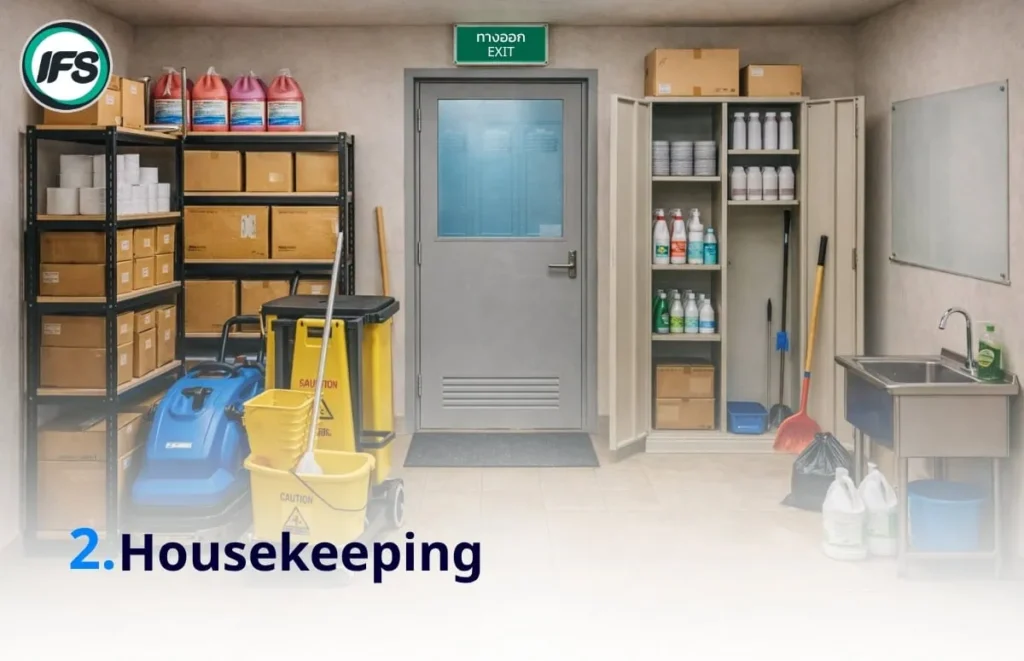
2. Housekeeping: Cleaning and Workplace Organization
Housekeeping is not limited to cleaning alone. It is a systematic approach to managing the workplace to ensure orderliness, safety, and the elimination of hazards that may lead to accidents. Many workplace incidents are not caused by complex machinery or equipment, but rather by disorganized environments such as tools left in walkways, cables laid across floors, or materials stored improperly.
At the core of effective housekeeping is the 5S methodology, which consists of Sort, Set in Order, Shine, Standardize, and Sustain. This structured approach to workplace organization enhances operational efficiency while reducing risks in daily operations.
5S is not merely an activity for maintaining tidiness. It is a system that enables employees to work safely, minimize accidents, and continuously improve operational efficiency.
- Sort (Seiri): Separate necessary and unnecessary items.
- Set in Order (Seiton): Arrange items systematically for easy access.
- Shine (Seiso): Clean and inspect equipment regularly.
- Standardize (Seiketsu): Maintain consistent standards.
- Sustain (Shitsuke): Develop discipline and make it a habit.
This approach enables employees to organize their workspaces systematically, from identifying and removing unnecessary items, to storing tools in designated locations, and maintaining a clean and ready to use environment at all times.
Implementing 5S in operational areas helps reduce risks across various scenarios, such as tripping over objects, colliding with equipment, or wasting time searching for tools. When everything is properly organized, employees can work more efficiently, safely, and with fewer errors.
Another critical aspect of housekeeping is the proper storage of materials and equipment. Frequently used items should be placed within easy reach. Unused materials should be stored neatly without obstructing walkways. This is especially important in main pathways, emergency exits, and shared workspaces, which must remain clear at all times to prevent accidents and ensure safe evacuation during emergencies.
One of the most common workplace incidents is slipping on wet surfaces, whether caused by spills, cleaning activities, or liquids from operational processes. When a wet floor is identified, employees must immediately place warning signs to alert others and promptly clean the area to minimize the risk of slips and falls.
Effective housekeeping does more than maintain cleanliness. It reduces accidents, enhances operational efficiency, and establishes clear safety standards within the workplace.
“An organized workplace is the most effective system for accident prevention.”

3. Driving Safety: Safe Driving Practices
The use of company vehicles is a high-risk activity, particularly in roles that require travel between multiple operational sites, such as site inspections, equipment transportation, interdepartmental travel, or providing driving services for executives. Without clear control measures, road accidents can occur and impact employees, company assets, and other road users.
Before using any vehicle, drivers must conduct a vehicle inspection every time to ensure it is in proper working condition. Basic checks should include the braking system, tire condition, signal lights, headlights, brake lights, and fuel or energy levels. These inspections help reduce the risk of vehicle failure during operation.
Another critical consideration is compliance with passenger limits and load capacity. Company vehicles must not exceed the specified number of passengers and should not carry equipment or materials beyond the vehicle’s capacity. Excess weight can make the vehicle more difficult to control and increase the risk of accidents.
Drivers must meet the required qualifications before performing their duties. This includes holding a valid driver’s license in accordance with legal requirements, completing driving safety training, and receiving authorization to operate company vehicles. Drivers must also pass company required health checks to ensure they are physically and mentally fit for the role.
Driving behaviour is a key factor in workplace safety. Drivers must not consume alcohol or use illegal substances before or during work. If experiencing fatigue, illness, or taking medication that causes drowsiness, drivers must stop and rest immediately to prevent accidents caused by falling asleep at the wheel.
Basic safe driving requirements include complying with traffic laws and regulations, wearing seat belts at all times in every seat, wearing helmets when operating motorcycles, and refraining from using mobile phones while driving. Even a few seconds of distraction can lead to serious accidents.
“Safe driving does not only protect the driver, but also everyone on the road.”

4. Electrical Safety
Electricity is essential for operations in buildings and workplaces. At the same time, it is one of the major hazards that can cause injury and property damage if not used properly. Electrical risks commonly arise during maintenance work, the use of electrical equipment, or operations in wet or damp environments.
Electrical hazards can generally be classified into three main types:
- Direct contact: Contact with live electrical current, such as touching exposed wires without insulation.
- Indirect contact: Contact with equipment that has leakage current.
- Short circuit: Electrical faults that can generate excessive heat or cause fire.
Before starting work, employees must inspect electrical equipment such as cables, plugs, and insulation. If any damage is identified, the equipment must be taken out of service immediately. In addition, employees should avoid using electrical equipment with wet hands or in areas with standing water, as water conducts electricity and increases the risk of electric shock.
During operation, if any abnormal signs are detected such as burning smells, smoke, unusual sounds, or excessive heat, the equipment must be stopped immediately and reported to the responsible person. Continuing to use faulty equipment may lead to fire or serious incidents.
After using electrical equipment, employees should unplug devices by holding the plug, not by pulling the cable. Warning tags must be placed on damaged equipment to prevent others from using it without being aware of the associated risks.
In the event of an electric shock incident, the first action is to immediately cut off the power supply, such as by turning off the switch or circuit breaker. Do not touch the injured person directly while the power is still on, as this may result in injury to the rescuer as well.
5. Manual Handling & Lifting
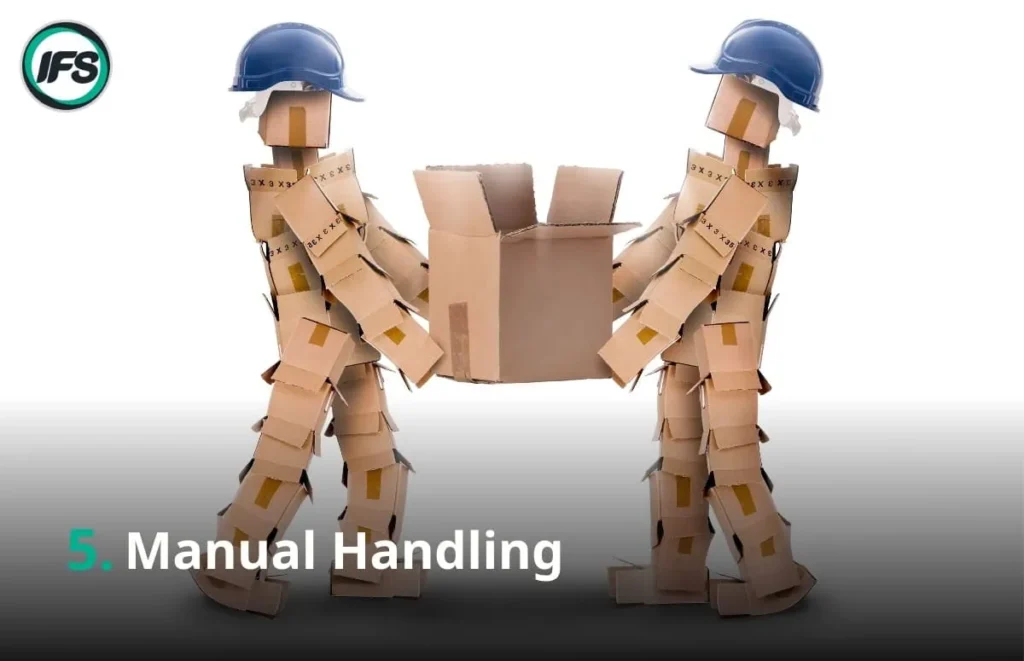
Lifting and moving materials is a common activity in building operations and service work. However, when performed incorrectly, it can result in injuries to muscles, tendons, and the spine. These types of injuries often do not occur immediately but develop over time due to repeated improper lifting techniques.
Before lifting any material, employees should assess the weight, size, and characteristics of the object. If the item is too large or too heavy, appropriate handling methods should be planned, such as using lifting aids or involving multiple personnel.
Another important step is planning the movement route. Employees should ensure that pathways are free from obstacles, floors are not slippery, and there is sufficient space to move materials safely.
Proper lifting technique requires using leg strength instead of the back. Employees should bend their knees while keeping the back straight, hold the load close to the body, and avoid twisting or turning while lifting. Twisting movements place excessive pressure on the spine and increase the risk of injury.
When gripping materials, employees should use a full hand grip rather than relying only on fingertips. This improves stability and reduces the risk of dropping the object.
“A single improper lift can lead to injuries that require months of recovery or may become permanent.”
6. Energy Isolation
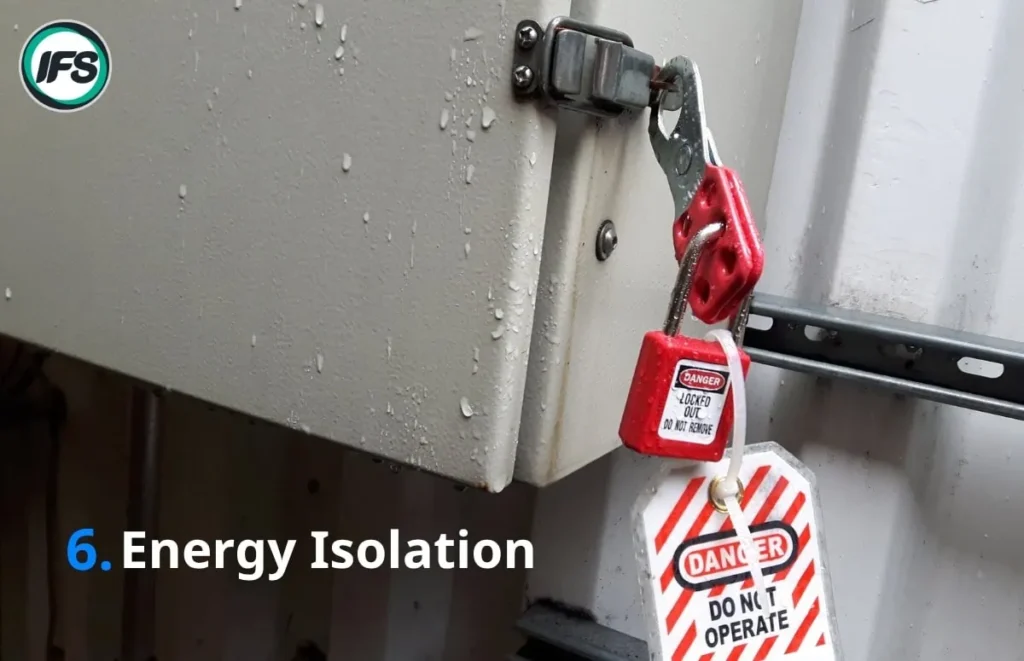
Energy Isolation is the process of isolating energy sources before starting maintenance work or performing tasks on machinery. Its purpose is to prevent the unintended release of energy while employees are working.
The types of energy that must be controlled are not limited to electricity. They also include mechanical energy, hydraulic energy, compressed air, and stored energy within machinery systems.
The Lockout Tagout system is implemented to prevent the activation of machinery or the release of energy during maintenance. This is achieved by locking energy control devices and placing warning tags to inform others that work is in progress.
Before starting work, employees must obtain authorization from the responsible authority, identify all energy isolation points, release any stored energy in the system, and verify that no residual energy remains.
“Many serious accidents occur due to the failure to isolate energy before starting work.”

7. Permit to Work
Permit to Work is a control system for high-risk activities. Its objective is to ensure that all tasks with significant hazards are reviewed, planned, and approved before execution. In simple terms, this system serves as a safety checkpoint before work begins, preventing hazardous tasks from being carried out without proper controls.
Tasks that require a Permit to Work system typically involve a high potential for serious incidents, such as working at height, confined space entry, hot work, machinery maintenance, or tasks involving hazardous energy.
A key step in this system is conducting a risk assessment of the work to be performed. This includes identifying potential hazards, analysing their impacts, and defining appropriate control measures such as the use of proper personal protective equipment, isolating hazardous areas, preparing rescue equipment, or assigning standby personnel.
Once control measures are established, a Permit document is issued. This document confirms that the work area has been inspected and that all safety measures are in place before work begins. The permit must be approved by the responsible person or authorized authority before any work can proceed.
Another critical step is ensuring clear communication among all involved parties regarding work conditions, including the scope of work, safety measures, and operational limitations. This ensures that everyone shares a common understanding of the risks before starting the task.
Permit to Work is not merely a document. It is a risk management system that enables organizations to control hazardous work in a structured and systematic manner.
8. Confined Space Entry
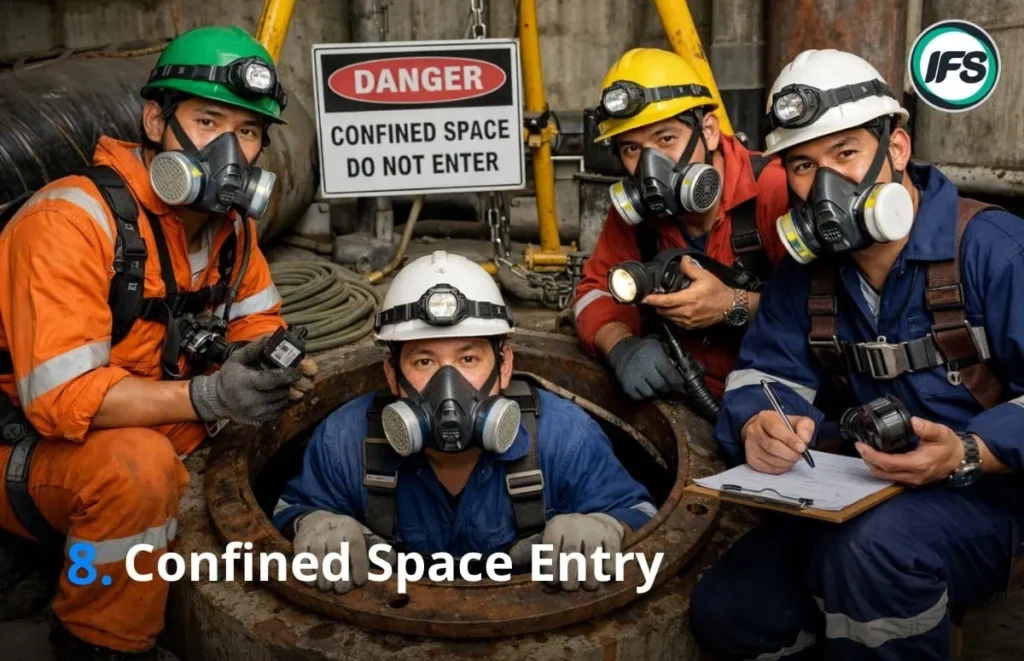
A confined space is an area that is not designed for continuous human occupancy. Work in such environments requires specially trained personnel who have been certified by recognized authorities.
Confined space operations require four designated roles, as mandated by safety regulations, to prevent serious incidents:
- Authorized Person: Approves the work permit.
- Supervisor: Oversees operations and ensures safety compliance.
- Standby Person: Monitors conditions and provides rescue support.
- Entrant: Performs the work inside the confined space.
Examples of confined spaces include tanks, pits, and underground pipelines. These environments may present risks such as oxygen deficiency, accumulation of toxic gases, or inadequate ventilation.
Before entering a confined space, atmospheric testing must be conducted to measure oxygen levels, flammable gases, and toxic gases. In addition, all energy sources connected to the space must be isolated.
A rescue plan and emergency equipment must be prepared in advance to ensure immediate response in case of an emergency.
A standby person must remain outside the confined space at all times. A reliable communication system must also be in place between the entrant and the standby person to monitor conditions inside the space.
Confined space operations involve the roles of Authorized Person, Supervisor, Standby Person, and Entrant. Each role must clearly understand its responsibilities, and role substitution is strictly prohibited.
9. Working at Heights
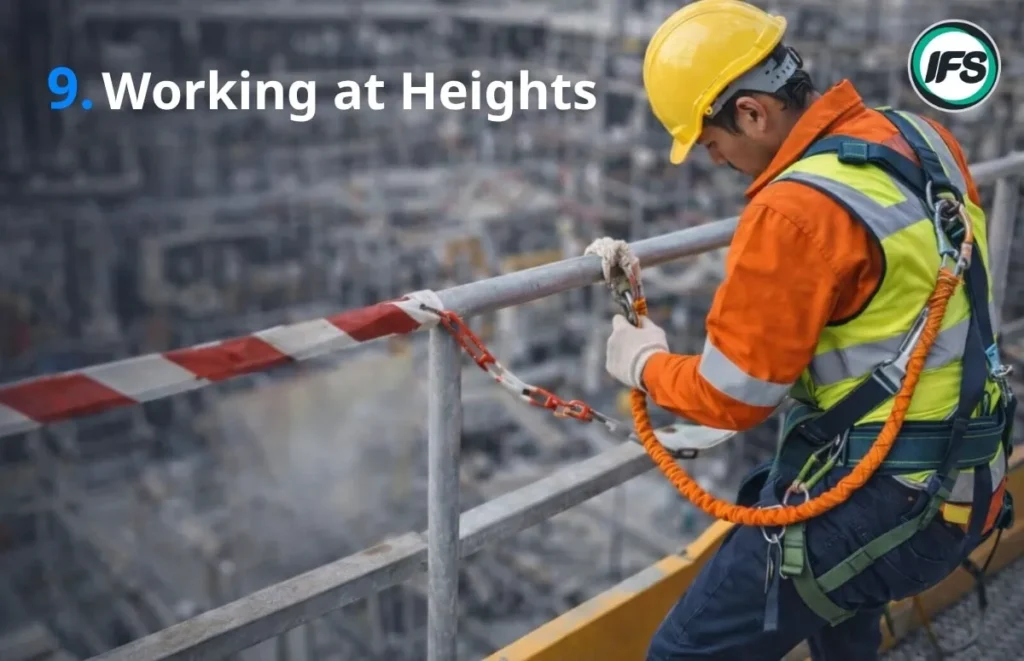
Working at height is one of the leading causes of serious incidents in building operations. This includes activities such as high-rise cleaning, maintenance work, equipment installation, and structural inspections. Falls from height often result in severe injuries or fatalities. Therefore, such work must be carried out under strict safety regulations.
The first fundamental rule is that working at height alone is strictly prohibited. A co-worker or standby person must always be present to provide immediate assistance in case of an emergency.
Employees working at height must ensure that the work area is safe and has been assessed by a competent person or supervisor. A proper risk assessment must be conducted to define safe work methods before starting any task.
During operations, employees must wear appropriate personal protective equipment, including a safety harness, safety helmet, and safety shoes. All equipment must be in proper working condition and inspected before use. Employees must strictly comply with all safety requirements.
The area below the work zone must be barricaded or clearly marked as a hazardous area to prevent others from entering. This control measure is essential to reduce the risk of injuries caused by falling objects.
When using scaffolding, the structure must be stable and equipped with guardrails if the working height exceeds 2 meters. Wheels must be locked or the base must be secured before use. The number of workers on each level must be limited according to specifications to prevent overloading.
When using ladders, safety rules must also be followed. Ladders must be placed on stable and level surfaces. Employees must not stand on the top two steps as specified. A second person should hold the ladder to improve stability during use.
For rope access work or tasks requiring specialized height access techniques, at least two qualified safety personnel must supervise the operation. A dual rope system must be used, consisting of a working line and a safety line. All equipment must be inspected before and after use.
“There is no room for negligence when working at height.”
10. Stopping Unsafe Work
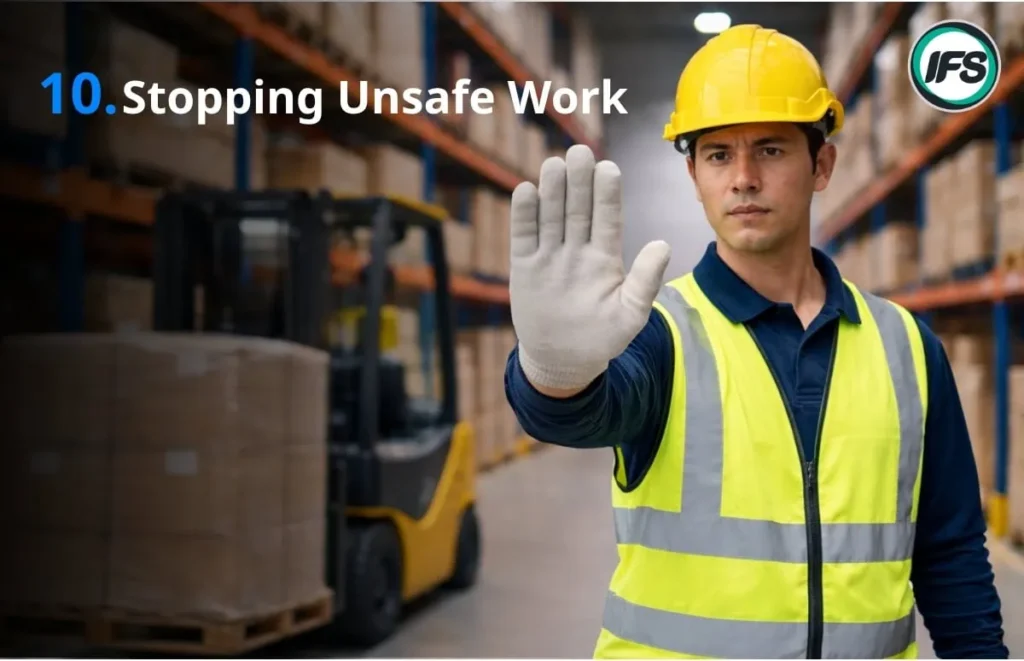
Stopping Unsafe Work is a fundamental principle of workplace safety systems. It empowers every employee with the authority to stop work immediately when an unsafe condition is identified.
The OSPT principle consists of Observe, Stop, Plan, and Think. This approach helps employees assess situations before starting work and during operations.
Situations that require immediate work stoppage include the absence of appropriate personal protective equipment, lack of understanding of work procedures, unsafe work environments, or when risk control measures have not been properly implemented.
Stopping work for safety reasons is not an unjustified interruption. It is a proactive measure to prevent potential incidents that could impact the individual, coworkers, and others involved.
If the issue has not been resolved, work must not proceed under any circumstances.
Conclusion: 10 Workplace Safety Rules Every Employee Must Follow
The 10 workplace safety rules form the foundation of the safety management system implemented by IFS Group to control risks in operational areas. These rules cover a wide range of practices, from chemical control, workplace organization, and safe driving, to the use of electrical equipment, manual handling, energy isolation, the Permit to Work system, confined space entry, working at height, and the right to stop unsafe work.
These rules are not established merely as compliance requirements. They are structured safe work practices designed to reduce workplace incidents, prevent losses, and establish consistent safety standards that all employees must follow. This approach reflects IFS Group’s ongoing commitment to developing and elevating safety standards in building services operations.
When employees understand risk control systems and consistently follow workplace safety rules, risks can be managed at the source. Incidents are reduced, operational efficiency improves, and the organization can maintain high safety standards while building long term confidence among stakeholders.
If your organization wants to raise safety standards at work to be a reality at every work site.
👉 More details can be found at the service page of the IFS group of companies.