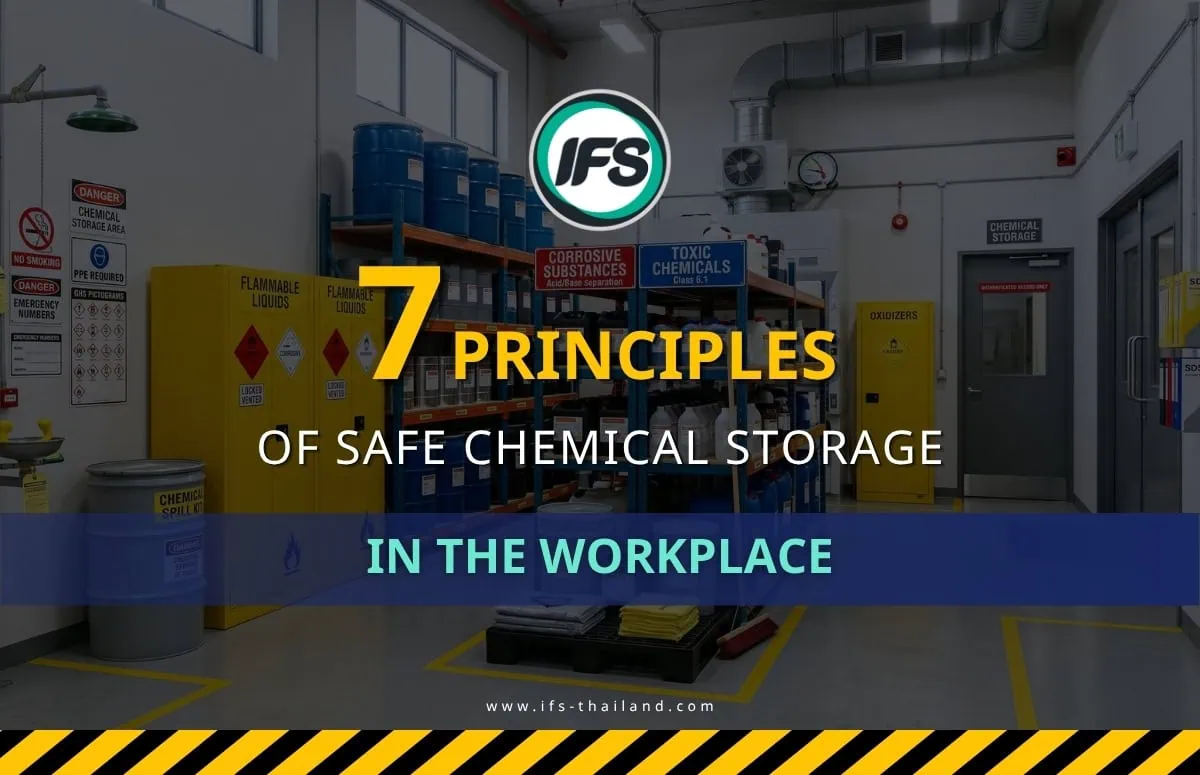
Proper chemical storage is one of the most important ways to control workplace risks at the source. When chemicals are not managed correctly, they can lead to leaks, misuse, accidental exposure, and serious safety incidents.
In many organizations, workplace safety only becomes a priority after an incident occurs. However, preventive measures should begin long before problems arise. One commonly overlooked area is chemical storage, especially in service operations such as cleaning services, where chemical handling directly affects employee safety and operational standards.
Improper storage practices do not only impact the storage area itself. Risks can gradually spread throughout the organization, affecting employees, daily operations, regulatory compliance, and even the company’s reputation.
This article explains seven practical principles for safe chemical storage that organizations can apply to reduce workplace risks, improve safety awareness, and strengthen chemical management standards across all operational areas.
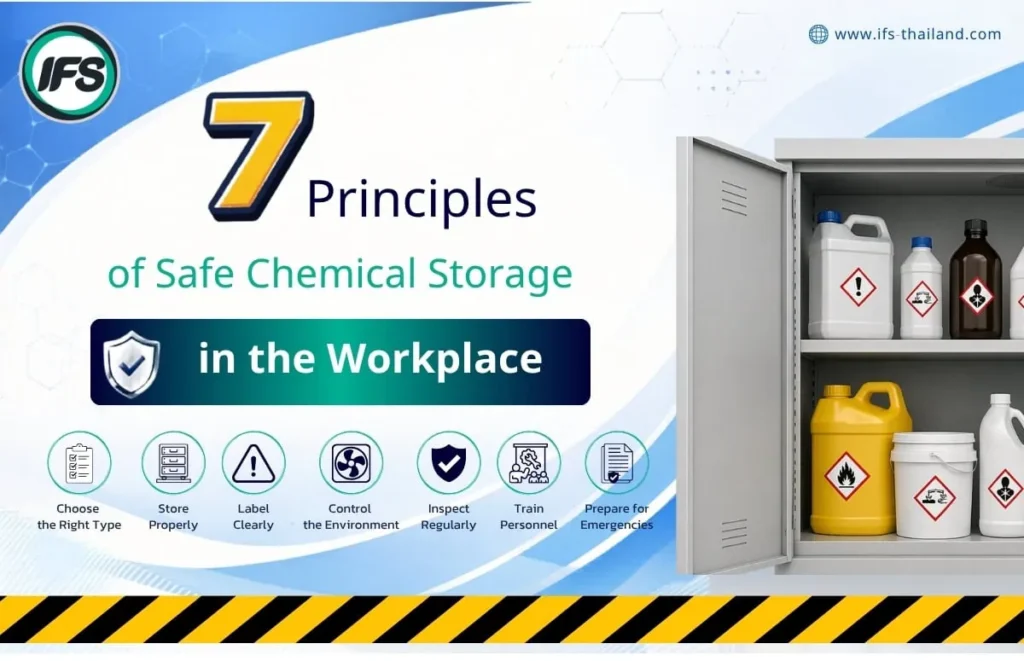
7 Principles for Safe Chemical Storage in the Workplace
1. Control Risks at the Source: Use Only Approved Chemicals
Effective chemical storage begins with proper chemical selection. Organizations should require all chemicals to be approved and registered before use to ensure standardized control over chemical types, risk levels, and storage methods across all departments.
Organizations with strong safety management systems do not allow individual departments to independently purchase chemicals without oversight. The more chemical varieties introduced into the workplace, the greater the complexity and risk of misuse.
Common Example:
A cleaning storage area contains multiple brands of floor cleaning solutions stored together, even though they serve the same purpose. Employees choose products based on familiarity, which can lead to selecting the wrong chemical or accidentally mixing incompatible substances due to the absence of standardized controls.
2. SDS Documents must be easily accessible, not just available for Audits
An SDS (Safety Data Sheet) is an internationally recognized safety document that contains 16 sections covering chemical properties, hazards, first aid measures, storage guidelines, and disposal procedures.
One common issue is that many workplaces technically “have” SDS documents but rarely use them effectively because they are stored far from operational areas. During emergencies, such as chemical spills or accidental exposure, employees must be able to access safety information immediately without wasting time searching for documents.
One effective approach is to make SDS information easily accessible by:
- Placing QR codes on chemical storage cabinets.
- Posting summarized emergency information near storage areas.
- Providing quick-reference safety instructions for employees.
Organizations should also reinforce SDS awareness through regular safety talks and pre-shift safety discussions to ensure employees actively apply the information during daily operations.
3. Use Only Approved Containers and never modify them
According to workplace safety standards, chemicals must never be transferred into food or beverage containers. The primary risk is not only misuse, but also misidentification.
Real-World Examples:
- An employee transfers cleaning chemicals into a drinking water bottle for convenience but fails to apply a label.
- Another employee assumes the bottle contains water and uses it immediately.
Most workplace incidents are not caused by major accidents, but by carelessness, routine shortcuts, and unsafe habits that gradually normalize unsafe behaviour.
Using approved containers and labelling them correctly every time is not simply a compliance requirement. It is a critical preventive measure that reduces misunderstandings before chemical use even begins.
4. Labels must be clear and easy to understand
Chemical labels are designed to communicate hazards immediately and clearly, not simply to satisfy compliance requirements.
A proper label should clearly display:
- Chemical name.
- Usage instructions.
- Safety precautions.
- Basic first aid guidance.
- Hazard symbols.
One of the most common issues in workplaces is faded, damaged, or incomplete labels that prevent employees from identifying chemicals correctly. As a result, workers may rely on assumptions or familiarity instead of verified information, increasing unnecessary risks.
Organizations should establish clear labelling standards that include:
- Readable font sizes.
- Easily recognizable hazard symbols.
- Color-coded identification systems for chemical categories.
These practices help employees make fast and accurate decisions during operations.
5. Separate Chemicals based on Risk, not convenience
Storing chemicals together for convenience may simplify operations temporarily, but it significantly increases workplace risks, especially when incompatible substances can react with one another.
Real-World Examples:
- Acidic chemicals stored next to alkaline substances can create dangerous reactions if leaks or accidental mixing occur.
- Flammable materials stored near heat sources can increase the likelihood of fire incidents.
Organizations should separate chemicals by category, such as:
- Acids.
- Alkalis.
- Flammable substances.
- Oxidizing agents.
Proper segregation is not only about organization. It is a critical risk prevention strategy that minimizes the chance of uncontrolled incidents.
6. Chemical Storage Areas must be properly controlled
Safe chemical storage areas must account for environmental conditions such as ventilation, temperature, and sunlight exposure. These factors directly affect chemical stability and may contribute to vapor accumulation or hazardous conditions.
Warning Signs to Monitor:
- Storage cabinets exposed to direct sunlight.
- Poorly ventilated storage rooms.
- Strong chemical odours accumulating in storage areas.
Organizations should establish designated chemical storage areas with controlled access and proper environmental management to reduce risks for employees and surrounding workspaces.
7. Conduct Regular Inspections instead of waiting for problems
Workplace safety standards require regular inspections of chemical storage areas to maintain safe conditions and reduce operational risks.
However, many organizations establish inspection procedures without maintaining them consistently. Over time, unresolved issues gradually accumulate.
Inspection Checklist Examples:
- Leaking or damaged containers.
- Loose or defective caps.
- Faded or unreadable labels.
- Chemicals stored outside designated areas.
- Expired or unused chemicals remaining in storage.
An effective inspection system should include:
- Clearly assigned responsibilities.
- Scheduled inspection intervals.
- Follow-up corrective actions.
Regular inspections help ensure chemical storage conditions remain safe at all times.
Chemical Storage: Turning Standards into real Workplace Safety
Safe chemical handling begins with proper storage practices. When risks are controlled at the source, organizations can significantly reduce incidents related to misuse, improper mixing, and accidental exposure.
In practice, however, having safety equipment and documentation alone is not enough. Organizations with effective chemical management systems focus equally on frontline safety behaviour, including:
- Regular safety talks.
- User-friendly storage area design.
- Clear labels and hazard communication systems.
These operational behaviours play a major role in transforming safety standards into real-world workplace protection.
FAQ about Safe Chemical Storage
Q: Must chemicals always be separated by category?
A: Yes. Chemicals should always be separated, especially substances that may react dangerously when combined.
Q: Is an SDS required for every chemical?
A: Yes. SDS documents are essential safety references and must be available for emergency response and safe handling procedures.
Q: What should a chemical storage area look like?
A: A chemical storage area should be well-ventilated, protected from direct sunlight, access-controlled, and specifically designated for chemical storage.
Q: Why is chemical segregation important?
A: Proper segregation reduces the risk of dangerous chemical reactions, heat generation, toxic vapours, and fire hazards.
Q: How often should chemical storage areas be inspected?
A: Organizations should conduct inspections regularly based on established schedules, such as weekly or monthly, with clearly assigned personnel responsible for monitoring.
Proper chemical storage is not just another operational procedure. It is a proactive risk control system that directly impacts employee safety and organizational standards.
Organizations that prioritize safe chemical storage consistently experience:
- Fewer workplace incidents.
- Better operational risk management.
- Stronger workplace safety culture.
- Improved compliance and organizational credibility.
“Sustainable workplace safety does not come from solving problems after they occur. It comes from preventing risks from the beginning.”