IFS Group operates amid a structural transformation in Thailand’s integrated facility management industry. Services that were once viewed merely as operational support costs have evolved into a critical organizational infrastructure. Today, facility management directly impacts business continuity, governance standards, safety, and long-term corporate reputation.
Modern facility management can no longer be separated from issues of standards, labour management, safety, and ESG considerations. Large organizations with multi-unit and multi-site operations face complex requirements arising from laws, internal policies, and stakeholder expectations. As a result, the selection of an integrated facility management provider has shifted from a price-based decision to a comprehensive assessment of organizational capability, quality control systems, and long-term stability.
Within this context, the role of facility management providers has expanded from contract-based service execution to becoming an integral part of organizations’ nationwide operational support structures. This role requires organizational scale, systematic processes, and the ability to manage the complexity inherent in large enterprises.
The Operational Foundation of IFS Group
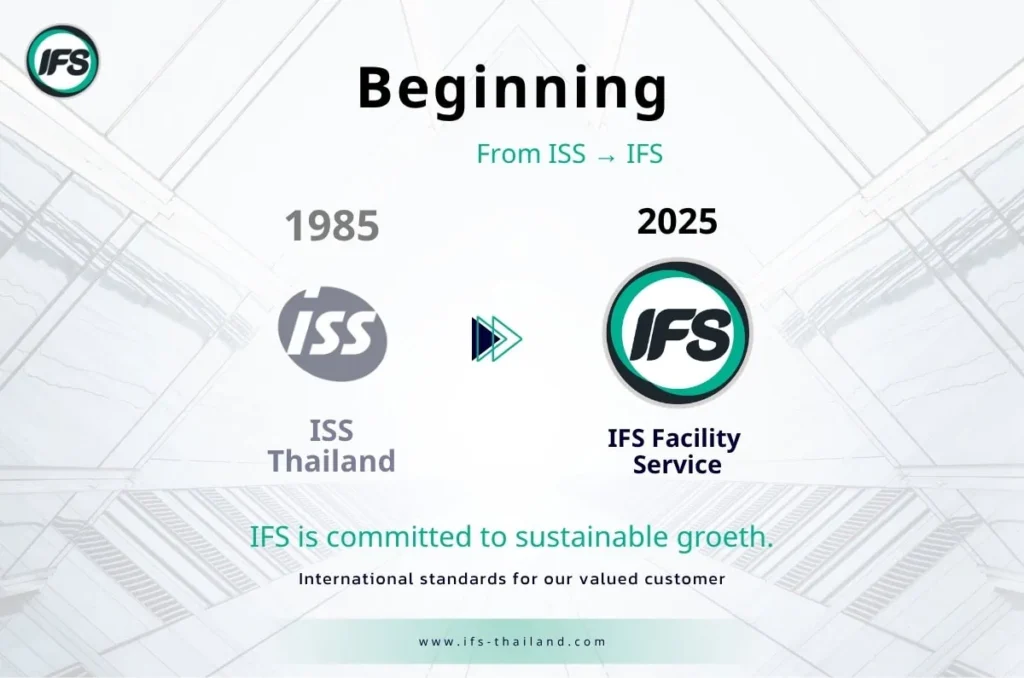
IFS Group is built on an operational foundation developed from internationally recognized facility management standards. This foundation was accumulated and refined during its period of operation under the ISS Thailand brand, a Danish-based organization widely recognized for its facility management systems, quality control standards, and strong corporate governance.
The knowledge, operational systems, and management philosophies from that period have become core pillars of IFS Group. These capabilities have been continuously developed across workforce management structures, performance reporting systems, safety governance, and enterprise-wide standard control.
IFS Group’s operating philosophy emphasizes structured processes, consistent service quality, and auditability. These principles form the foundation of integrated facility management at the enterprise level and have been adapted to Thailand’s context, which includes diverse industries, regulatory requirements, and the complexity of large-scale organizations.
IFS Group’s Role as a Nationwide Service Provider
The growth of IFS Group is reflected not only in the number of projects or service areas, but also in the development of an operational structure capable of managing multiple services, departments, and locations under a single and consistent standard.
For large corporate clients, evaluating an integrated facility management provider extends beyond operational capability. Equal importance is placed on organizational strength, financial stability, and governance frameworks. In response, IFS Group has established group-level operating and quality control systems that align with multi-layered procurement, audit, and governance requirements.
As a result, IFS Group’s role has evolved from a specialized service provider to a core component of clients’ business support structures. This approach helps reduce systemic risk and ensures consistent service quality across the organization.

Three Core Services of IFS Group Supporting Organizational Needs
Cleaning Services and Corporate Standards
IFS Group’s cleaning services are designed to support large organizations by integrating hygiene standards, safety requirements, and corporate image considerations. These services go beyond physical cleanliness and function as part of an organization’s overall operational framework.
Security Services and Business Continuity
IFS Group’s security services focus on supporting business continuity through structured systems, standardized controls, and alignment with industry-specific security policies. This approach helps mitigate risks that may disrupt overall operations.
Manpower Outsourcing as an Organizational Support Structure
IFS Group’s manpower outsourcing services enable organizations to manage human resources flexibly within clear legal and labour compliance frameworks. These services support long-term growth and organizational restructuring while maintaining workforce standards.
Key Figures Reflecting Market Confidence
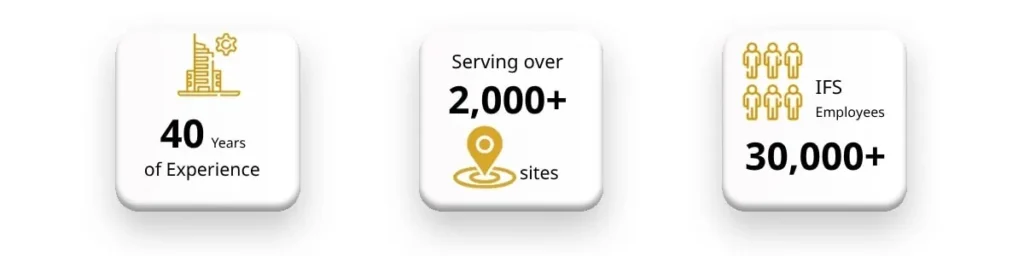
In the corporate integrated facility management market, provider scale and stability are critical decision factors. In 2025, IFS Group reported total revenue exceeding THB 7 billion, employed more than 30,000 personnel, and managed over 2,000 projects nationwide.
After delivering a 15 percent profit increase in 2025, IFS Group has set a target of 20 percent profit growth for 2026, driven by tighter cost discipline and a more focused execution supported by clear strategic direction and well-defined business objectives. This reflects the strength of the Group’s organizational structure and the continued confidence of business partners nationwide.
These figures are presented not as image-driven achievements, but as structural indicators. They enable organizations to objectively assess the scale, capability, and role of IFS Group as a nationwide integrated facility management provider.
Conclusion: IFS Group’s Role in the Modern Organizational Structure
IFS Group has grown through the continuous development of standards, systems, and operational structures designed to support large enterprises. Nationwide integrated facility management requires trust, consistent service quality, and management systems that remain transparent and auditable over the long term.
IFS Group’s role therefore extends beyond that of a contractual service provider. The Group functions as part of organizations’ operational support infrastructure, helping manage risk, maintain standards, and enable stable and sustainable business operations over the long term.