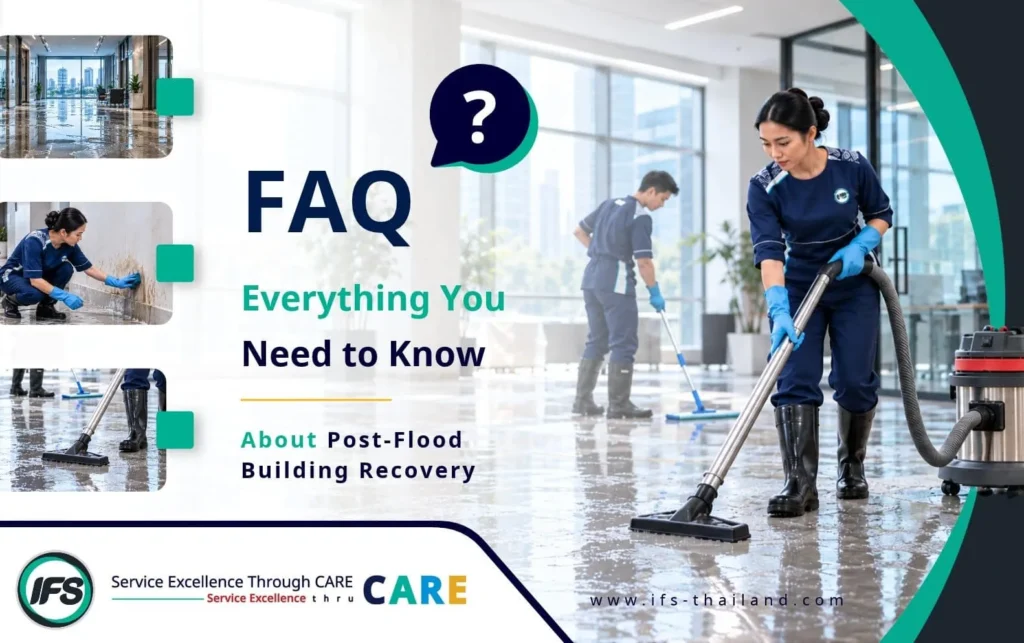
Once floodwaters recede, many organizations face the challenge of restoring their buildings and facilities to a safe, usable condition. Before cleaning or repairs begin, a thorough damage assessment is essential. Flooding can affect building systems, property, and the health and hygiene of building occupants. Hidden moisture and contaminants may also pose risks. If these issues are not properly addressed, they can compromise employee safety and delay the resumption of business operations.
To help organizations navigate the recovery process, IFS Group has compiled 10 frequently asked questions about post-flood damage and potential risks. These answers provide practical guidance on what to inspect, which issues to address first, and how to prepare affected areas for safe use.
Q: What safety hazards should be considered before sending an inspection team into a building after flooding?
A: Before entering a flood-affected building, assess potential hazards such as electrical shock risks, structural damage, slippery floors, and debris left behind by floodwaters. Access to areas that have not been confirmed safe should be restricted.
Designated personnel or qualified professionals should assess the relevant hazards before entry is authorized. These precautions help prevent accidents during building inspections and recovery preparations.
Q: How should mud, wastewater, and other contaminants left behind by floodwaters be handled?
A: Before cleaning begins, assess the source of the floodwater and the potential contamination risks. Mud and sediment may contain sewage, oil, or hazardous chemicals.
Once the area has been assessed as safe for cleaning, remove the sediment and clean affected surfaces using methods appropriate for the site conditions.
If hazardous substances or wastewater contamination are suspected, isolate the affected area and consult qualified specialists to determine the appropriate treatment and cleanup procedures.
Q: How should residual moisture and mold be identified and addressed after flooding?
A: Inspect areas where moisture may remain trapped, including beneath flooring, behind walls, above ceiling panels, and within water-absorbent materials. Promptly address excess moisture and dry affected materials to reduce the risk of mold growth.
If musty odors or visible mold are detected, identify the underlying cause and address the affected materials. Simply masking odors or painting over mold will not resolve the problem.
If mold has spread across a large area, qualified specialists should assess the situation and carry out the necessary remediation.
Q: When should flood-damaged floors, walls, ceilings, and building materials be repaired or replaced?
A: The decision to repair or replace damaged materials depends on the material type, extent of damage, and whether the materials remain suitable for use. Common examples include swollen wood flooring, deteriorated drywall, and warped ceiling panels.
Materials that remain in good condition and can be safely restored may be repaired. However, materials that have lost their strength or are too severely damaged to function as intended should be considered for replacement.
If cracks are visible or structural damage is suspected, a qualified engineer should inspect the affected areas before repairs begin.
Q: What should be inspected before restarting electrical and air-conditioning systems affected by flooding?
A: Electrical and air-conditioning systems exposed to floodwater should not be restarted until they have been inspected by qualified technicians or engineers.
The inspection should cover electrical control panels, wiring, protective devices, and air-conditioning components to determine whether damaged equipment needs to be repaired or replaced.
If mold contamination is suspected within the air-conditioning system, the issue must be addressed before the system is restarted to prevent mold from spreading to other areas of the building.
For more information about IFS Group’s general electrical and air-conditioning maintenance services, visit our Technical & Engineering Service page.
Q: Can flood-damaged furniture, documents, and goods still be used?
A: Whether flood-damaged items can be reused depends on the type of material, how long they were exposed to water, and the level of contamination.
Furniture with hard surfaces may be cleaned and reused if contaminants can be properly removed and the materials thoroughly dried. However, absorbent items such as upholstered sofas and carpets may need to be replaced if they cannot be safely restored.
Important documents may require specialized preservation methods. Food and medications exposed to floodwater should not be used, even if their outer packaging appears undamaged, as they may no longer be safe.
Q: What evidence should be documented before moving or disposing of flood-damaged property?
A: Take photographs of damaged areas and property, and prepare a detailed inventory that records the type, quantity, condition, and location of affected items.
Keep asset identification numbers and relevant documents showing the value of damaged property to support inspections and damage assessments.
If insurance coverage applies, review the policy’s claim requirements and required documentation before disposing of items that do not need to be removed immediately. However, documenting damage should never delay urgent actions needed to address safety hazards.
Q: How should recovery work be prioritized when multiple areas of a building are damaged?
A: Recovery efforts should be prioritized based on immediate safety hazards, damage that could worsen if left unaddressed, and the operational importance of each area. Critical spaces may include building entrances and exits, production areas, and warehouses.
Restoration should begin only in areas that have been assessed as safe. Organizations should also identify which tasks must be completed before others can proceed and clearly assign responsibilities.
This approach helps ensure that cleaning, repairs, and preparations for reopening are carried out in an appropriate sequence.
Q: What should organizations inspect before reopening a building after restoration?
A: Before reopening, confirm that all restoration work has been completed according to the agreed scope, affected areas are clean, and no significant moisture problems remain.
Inspection results or confirmation from the responsible personnel should also be available to verify that affected building systems are ready for use.
Any outstanding work or restrictions on building use should be documented. If unresolved issues pose a safety risk, they must be addressed before the affected areas are reopened. Organizations should also monitor the building for any signs of problems after operations resume.
Q: What services does IFS Group offer for post-flood building care, and how can organizations get in touch?
A: IFS Group provides commercial cleaning, Big Cleaning, and technical and engineering services for businesses and organizations.
Organizations can inquire about services appropriate for their site conditions and required scope of work.
To help the team assess the services that may be suitable, organizations should prepare information about the building type, location, floor area, and nature of the damage. Supporting photographs may also be provided if they can be taken safely.
For more information, visit our Cleaning Service page or submit your inquiry through the Contact Us page.