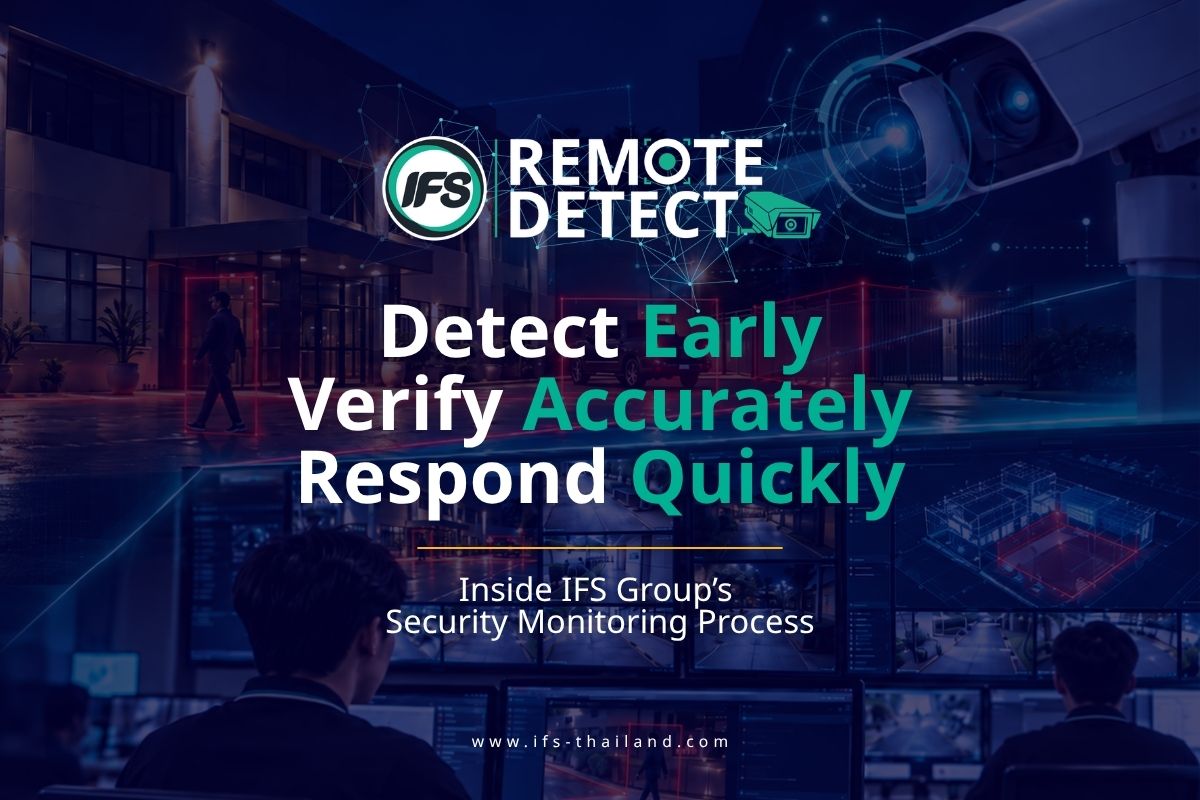
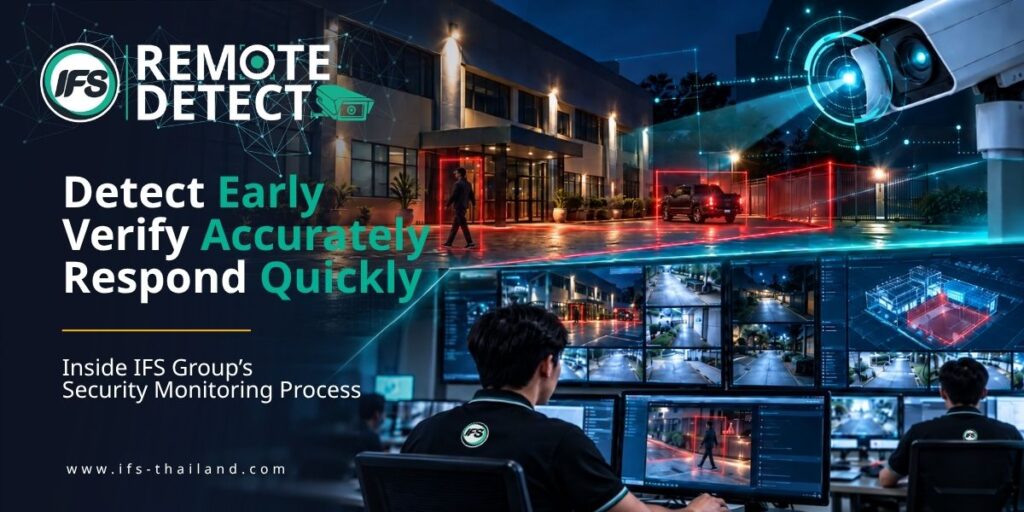
Effective site monitoring is not just about detecting unusual activity. When an important event occurs, it needs to be identified, verified, and communicated to the right person accurately and without unnecessary delay.
IFS Group’s Remote Detect service connects intrusion detection systems, video analytics, operators at the Central Monitoring & Command Centre (CMCC), and on-site security personnel within a coordinated monitoring and response process.
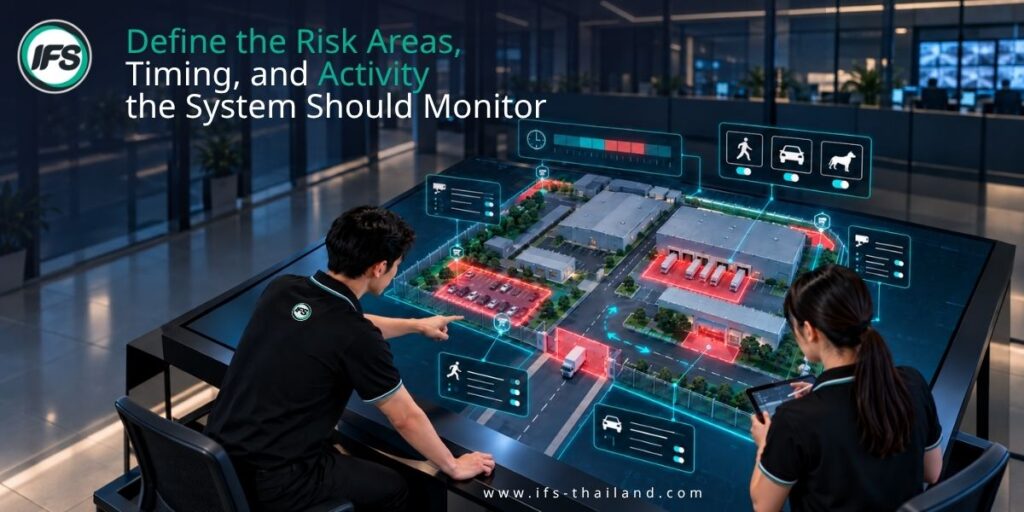
Define Where, When, and What the System Should Monitor
Every site operates differently. Entrances and exits may have a steady flow of people and vehicles throughout the day, while perimeter fences, material storage areas, or certain parts of a warehouse may see very little activity.
Monitoring conditions should therefore reflect the site’s normal operations and actual risk profile rather than applying the same settings across every area.
Set Monitoring Conditions Based on the Risks of Each Area
- Where should monitoring be focused?
Identify higher-risk locations such as entrances and exits, perimeter fences, warehouse doors, loading areas, or locations where valuable assets are stored. Specific monitoring zones or virtual lines can then be defined for the system to observe.
- When should the area be monitored?
Determine the periods when movement requires closer attention, such as after business hours, on holidays, or when fewer employees are present on site.
- What should the system detect?
Define the types of activity the system should analyze, such as people, animals, or vehicles, based on the risks associated with each location.
- Which events should be sent to the CMCC for review?
Set the conditions that should trigger a review, such as a person entering a restricted area or a vehicle crossing a designated boundary outside normal operating hours.
CCTV cameras and AI video analytics use these conditions to filter events before sending alerts to the CMCC. Effective configuration therefore needs to account for camera placement, viewing angles, lighting, and the surrounding environment.
Monitoring settings should also be reviewed whenever site operations or usage patterns change.
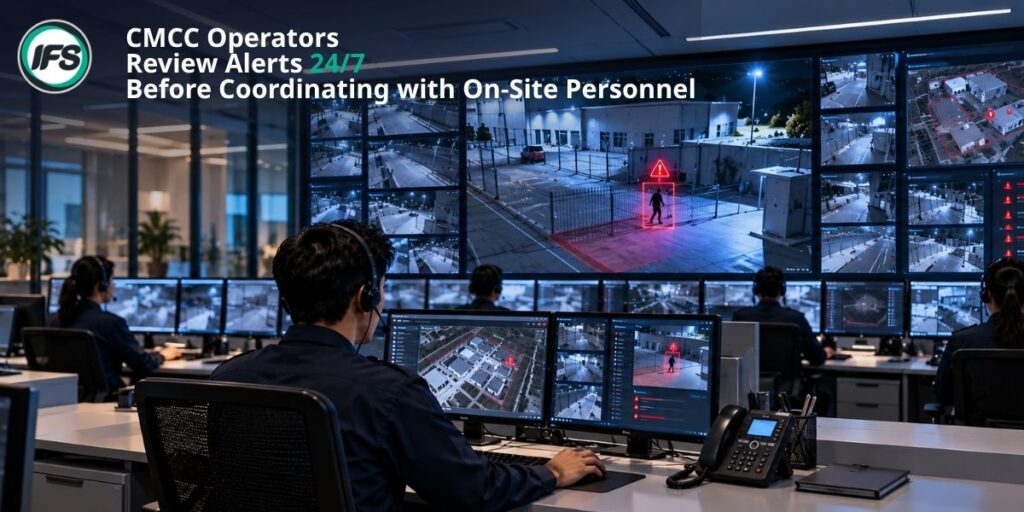
CMCC Operators Review Alerts 24/7 Before Coordinating with On-Site Personnel
When the system sends an alert to the Central Monitoring & Command Centre (CMCC), an operator reviews a short video clip of the event before determining whether further action is required.
The process includes two main steps:
- Verify the event
The operator reviews the footage to determine whether the event meets the criteria for action.
- Coordinate according to the agreed procedure
The CMCC contacts the on-site security officer or another person designated by the client to confirm the situation and notify the appropriate parties according to the agreed response plan.
CMCC operators work in shifts 24 hours a day. This means events that occur after business hours, on holidays, or when fewer personnel are on site can still be reviewed and coordinated according to the established procedure.
Define Responsibilities and Response Procedures for Each Site
The appropriate response varies depending on the type of risk and the organization’s operating structure.
IFS Group therefore works with each client to establish a response plan in advance. This ensures that the CMCC knows whom to contact when an event occurs and that the person receiving the alert understands what action to take.
| Area to Define | Details |
| Notification Contact | The person the CMCC should contact during each designated period |
| Response Personnel | The security officer or site representative responsible for checking the affected area |
| Contact Escalation | The next person to contact if the primary contact cannot be reached |
| Response Procedure | The location to inspect, how the situation should be managed, and how the outcome should be reported |
| Additional Escalation | Situations that require notification to a manager or another relevant department |
Defining contacts and escalation procedures in advance reduces the time needed to identify the appropriate person after an event occurs and allows the on-site team to begin responding according to the agreed plan more quickly.
At some sites, the response procedure may also include activating warning lights or an alarm to alert people nearby and help deter potential intruders before on-site personnel inspect the area.
After the event is closed, the CMCC sends a summary report to the client by email. Incident and monthly reports may also cover suspicious persons or vehicles, attempts to climb perimeter fences, CCTV system outages, and other events defined under the agreement for each site.
Facility management and security teams can use these reports to review high-risk locations, recurring incident patterns, and the effectiveness of previous responses. The information can then support adjustments to the security plan based on actual site operations.
This approach reflects how IFS Group integrates technology into facility management.
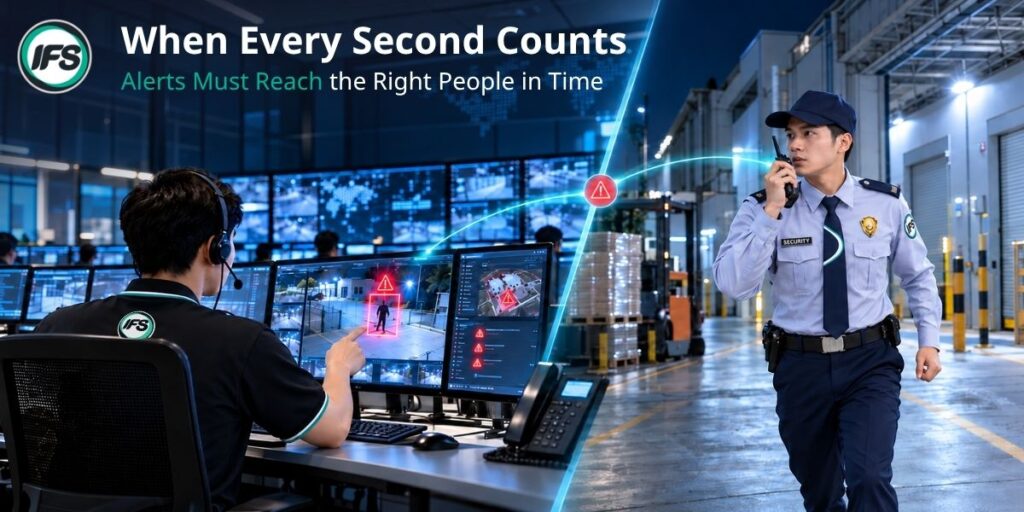
When Every Second Counts, Information Must Reach the Right People in Time
When unusual activity is detected, the time between the alert and the start of the response can affect how far the situation develops.
The sooner responsible personnel receive clear and relevant information, the greater the opportunity to address the situation at an early stage and reduce the potential impact on assets, personnel safety, or operations.
IFS Group begins by understanding the risks and actual operating conditions of each site. Video analytics, CMCC verification, and on-site response procedures can then be aligned so that each part of the process works together.
The goal is to ensure that events requiring action are reviewed and responded to in a timely manner.
If your organization needs a monitoring solution for perimeter areas, entrances and exits, warehouses, or other critical locations, IFS Group can assess the site and design a Remote Detect service that fits your actual operating requirements.
This helps organizations make effective use of every second after an event is detected to bring the situation under control.
Frequently Asked Questions About Remote Detect Monitoring
Q: When should an organization review its Remote Detect monitoring conditions?
A: Monitoring conditions should be reviewed whenever site usage or the risk profile changes. Examples include changes to access routes, operating hours, storage areas, or activity levels in locations that previously had less movement.
Detection conditions should remain aligned with normal activity at each location and during each time period so that the system can focus alerts on events that require review.
Q: How do camera placement, lighting, and the surrounding environment affect Remote Detect settings?
A: These factors affect the visual information the system uses for analysis. Camera position, viewing angle, lighting, and environmental conditions should therefore be considered together with the monitoring area and the types of activity the system is expected to detect.
Settings should be based on actual site conditions rather than applying the same configuration to every location.
Q: Why should notification contacts and escalation procedures be defined before monitoring begins?
A: Detecting an event is only the first step. The information also needs to reach the appropriate person.
Defining notification contacts, response personnel, and backup contacts in advance allows the CMCC to follow the agreed coordination process immediately when an event occurs.
Q: Does every alert require an on-site security officer to investigate?
A: No. Not every alert requires the same response.
When an alert reaches the CMCC, an operator first reviews the event footage to determine whether it meets the defined conditions and requires further action. If action is needed, the CMCC then coordinates with the responsible person according to the procedure established for that site.
Q: How can Remote Detect incident reports help improve a security plan?
A: Organizations can use incident reports to review where events occur, identify recurring patterns, and evaluate how previous incidents were handled.
This information can then be used to adjust monitoring locations, detection conditions, or coordination procedures so that the security plan remains better aligned with actual site operations.