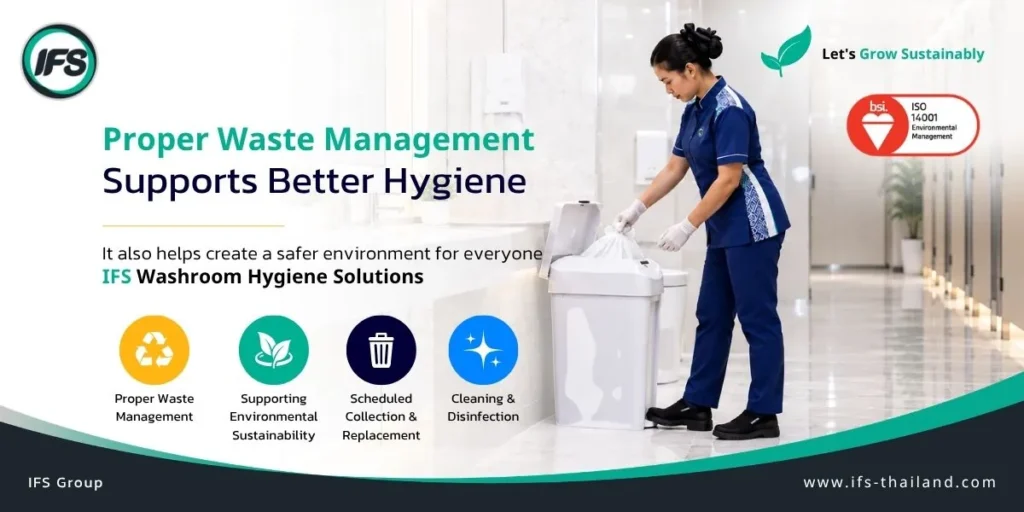
Proper waste management is an essential part of facility operations. Waste generated within a building requires ongoing attention, from collection and storage to transportation and final disposal. Each stage needs clear procedures and assigned responsibilities.
This is particularly important for waste from washrooms, such as used sanitary pads. Proper handling helps manage hygiene risks and minimize potential impacts on personnel, surrounding areas, and the environment.
From the Point of Use to Proper Waste Disposal
Managing used sanitary pads involves more than collection from restrooms. Under IFS Group’s procedures, waste collected from service sites is handled through a defined process until it is transferred for final disposal.
1. Collection from Service Sites
Used sanitary pads are collected from each service site according to established procedures. This helps prevent contamination and reduce potential impacts on personnel and surrounding areas.
2. Transfer to Designated Storage Areas
Collected waste is transferred to a dedicated waste storage room, where environmental conditions and temperature are maintained at appropriate levels. These measures help control odors and manage hygiene risks while the waste awaits transportation.
3. Scheduled Waste Transportation
The Washroom Hygiene team arranges for used sanitary pads to be transported for disposal within the same week. This schedule helps shorten storage times and reduce the potential impacts of keeping waste on-site for extended periods.
4. Transfer for Final Disposal
Used sanitary pads are transferred to the Nonthaburi Provincial Administrative Organization (Nonthaburi PAO). The organization operates an infectious-waste management and disposal system. The collected sanitary waste is sent for incineration according to the receiving facility’s procedures.
From Waste Management to Sustainable Facility Operations
Waste management plays an important role in sustainable facility operations. It involves managing hygiene risks, protecting personnel, and reducing the potential environmental impacts of daily activities.
Clear procedures and responsibilities throughout the process, from collection and storage to transportation and final disposal, demonstrate how sustainability can be integrated into everyday operations. These practices also support an organization’s environmental, social, and governance (ESG) approach.
IFS Group’s process for managing used sanitary pads is one example of putting these principles into practice through established waste-handling procedures.
For IFS Group, proper waste management is part of responsible facility management. It reflects an approach that considers hygiene, personnel well-being, and environmental impacts throughout daily operations.
Organizations seeking more information about washroom hygiene management can explore IFS Group’s Washroom Hygiene Solutions.