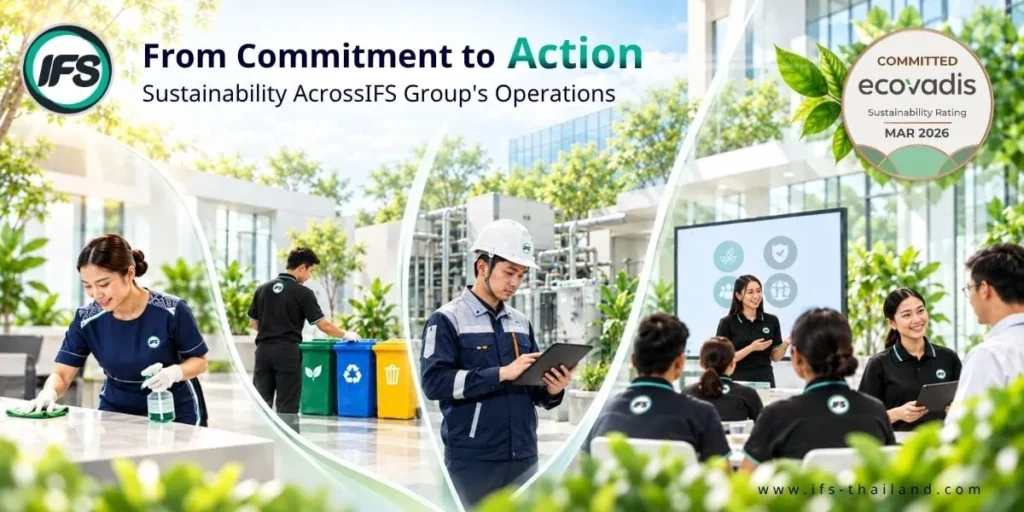
At IFS Group, sustainability is more than a policy commitment or a long-term goal. It is an integral part of the company’s operations, supporting balanced business growth while maintaining responsibility toward the environment, society, and stakeholders across the value chain.
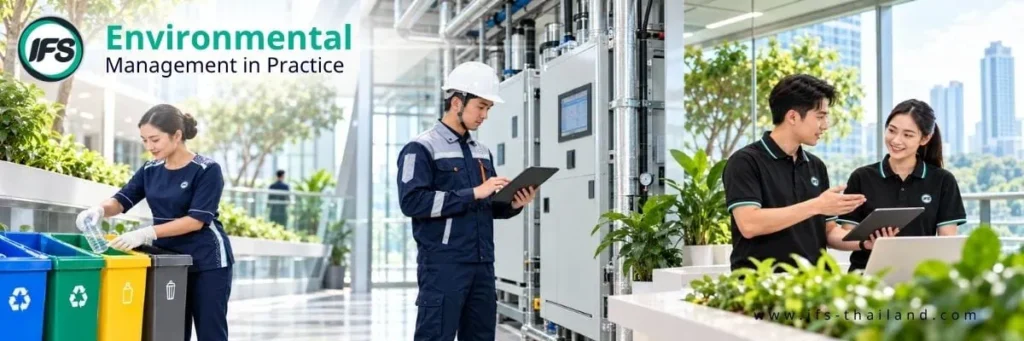
Putting Environmental Management into Practice
IFS Group focuses on reducing its environmental impact through measurable actions and continuous monitoring. The company prepares corporate carbon footprint reports to track greenhouse gas emissions and uses the findings to develop a systematic approach to carbon reduction.
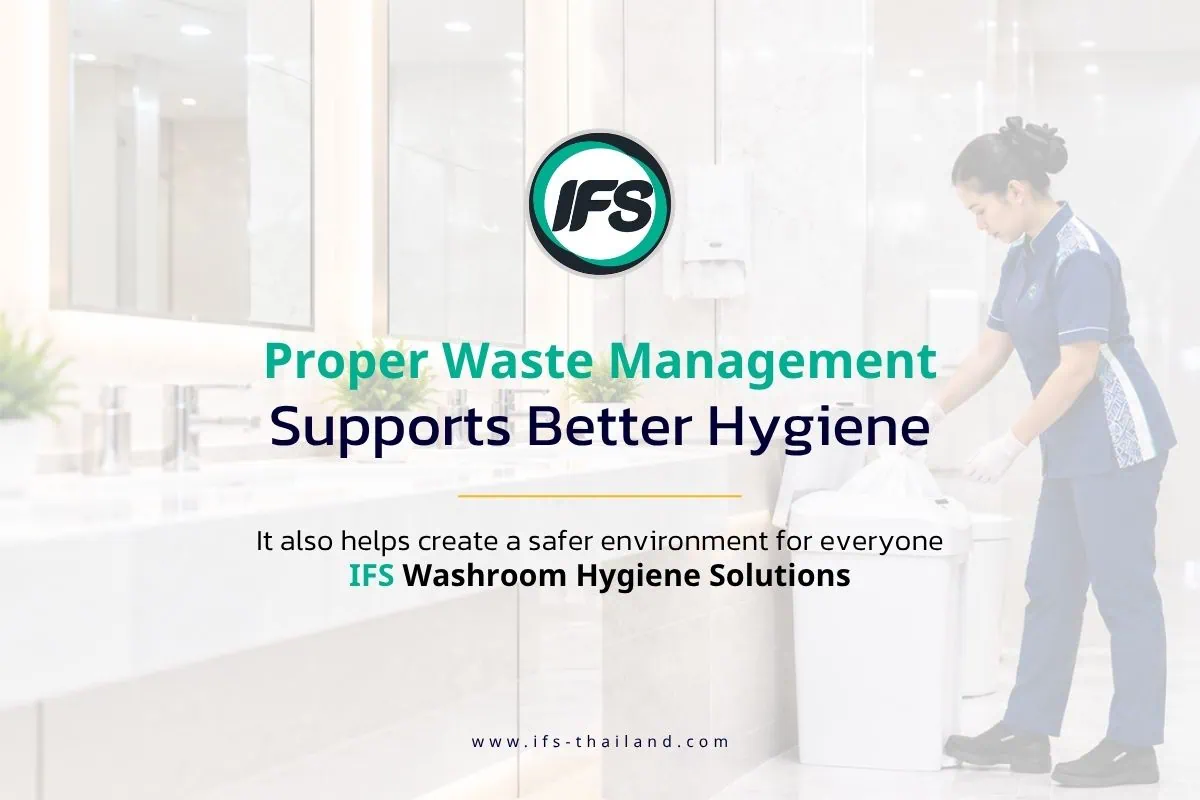
The company also promotes efficient resource use, waste segregation, and waste management in compliance with applicable requirements. These practices help improve resource efficiency and reduce long-term environmental impact.
Environmental considerations are also integrated into service delivery. For example, IFS Group uses aqueous ozone in cleaning operations to reduce chemical use. The company also considers environmental and social factors in its procurement decisions to encourage sustainable practices throughout the supply chain.
Supporting Employees at Every Stage of Employment
Employees play a central role in IFS Group’s operations. The company prioritizes employee care from the first day of employment through onboarding, training, skills development, and workplace safety programs.
IFS Group also focuses on employee well-being by supporting labor rights, providing benefits, and offering ongoing professional development opportunities. This includes managing workers under Memorandum of Understanding (MOU) labor arrangements in compliance with applicable laws and standards.
The company promotes diversity, equality, and inclusion by providing employment opportunities for people with diverse abilities and fostering a workplace where all employees have opportunities to develop and grow.
These efforts are reflected in IFS Group’s recognition through the THAIHRM Best Workplace Award 2026 – Gold Level and Workplace Excellence certification for 2026–2028. These distinctions recognize the company’s achievements in human resource management, organizational culture, and quality of work life.

Strengthening Operations Through Effective Corporate Governance
Alongside environmental responsibility and employee care, IFS Group emphasizes effective corporate governance to maintain transparency, accountability, and systematic performance monitoring.
The company establishes key performance indicators (KPIs), monitors operational efficiency, and regularly reviews performance. It also applies international standards covering quality management, environmental management, occupational health and safety, and facility management.
These practices help improve service quality, strengthen operational oversight, and build confidence among stakeholders.
Embedding Sustainability into Everyday Operations
From environmental management and employee care to supplier selection and corporate governance, IFS Group integrates sustainability principles into its day-to-day operations at every level of the organization.
Sustainability is therefore not simply an end goal. It is an ongoing approach that supports business growth while creating lasting value for society and the environment.
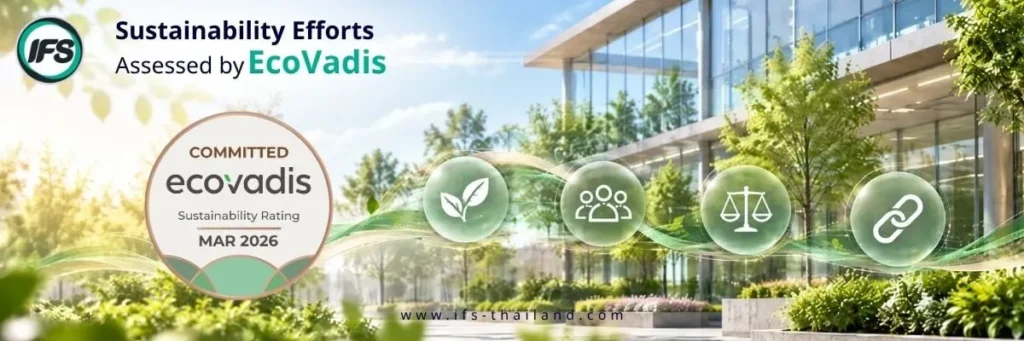
IFS Group’s Sustainability Efforts and the EcoVadis Assessment
IFS Group’s sustainability practices have also been evaluated under the EcoVadis framework, an internationally recognized sustainability assessment covering four key areas:
- Environment
- Labor & Human Rights
- Ethics
- Sustainable Procurement
The assessment examines company policies, management practices, supporting evidence, and actual performance outcomes. This approach aligns with IFS Group’s ongoing efforts to integrate sustainability into different aspects of its operations.
Beyond evaluating current performance, the external assessment helps the company identify its strengths and areas for improvement. These insights can guide process improvements and support greater operational efficiency in the future.
For IFS Group, the assessment is not the endpoint of its sustainability efforts. Instead, it provides further motivation for continuous improvement, helping the company make sustainability an integral part of its business operations, create shared value for society, and build a strong foundation for stable, long-term growth.