A clean washroom is not always a fully functional one.
Keeping washrooms ready for use requires systematic management of equipment, consumable supplies, maintenance, and service performance. The service model should also reflect the number of users and the specific characteristics of each location.
IFS has compiled 10 frequently asked questions to help organizations plan their washroom hygiene services, maintain consistent quality, and choose a management model with greater confidence.
Q: How are Washroom Hygiene Solutions different from washroom cleaning services?
A: Washroom cleaning services focus on the overall cleanliness of the space, including floors, sanitary fixtures, and frequently touched surfaces, to ensure that the area remains clean and presentable.
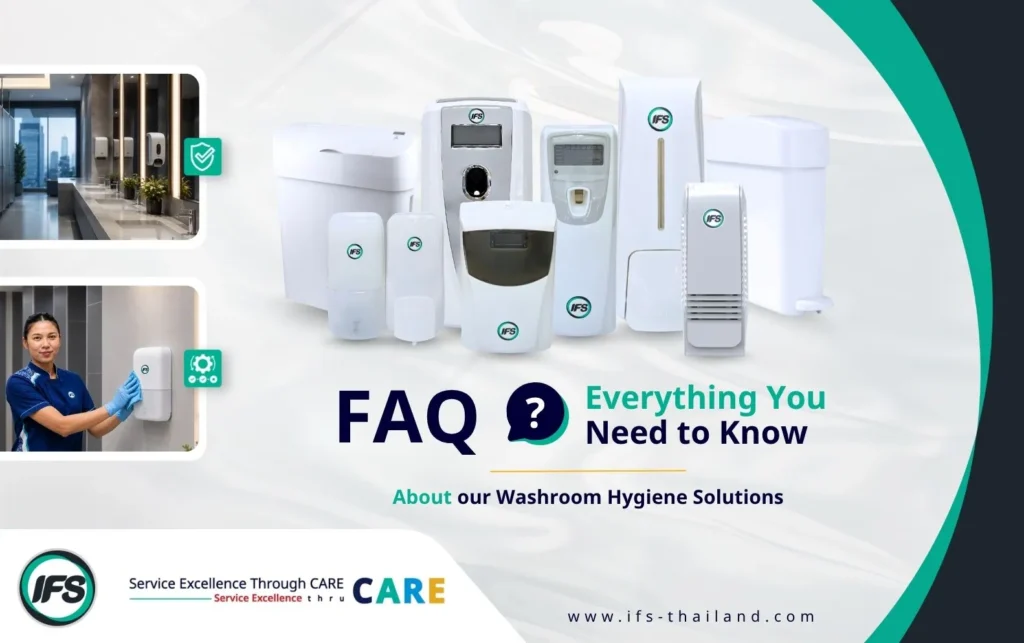
Washroom Hygiene Solutions go one step further by managing the equipment and products that users directly touch or use, including:
- Soap dispensers
- Paper dispensers
- Odour-control devices
- Sanitiser dispensers
- Sanitary waste bins
The service covers consumable refills, equipment inspections, and regular maintenance.
A washroom may appear clean but still have empty soap dispensers, malfunctioning equipment, or unpleasant odours if hygiene equipment is not managed alongside routine cleaning.
Q: What information should an organization prepare before planning its washroom hygiene service?
A: The organization should begin by collecting information in five key areas:
- Number and location of washrooms
- Number of users during different periods
- Operating hours
- Consumable usage levels
- Recurring issues, such as supplies running out or unpleasant odours
The condition and inventory of existing equipment should also be reviewed. This helps identify which equipment remains suitable for use, which items require improvement, and which washrooms experience heavier usage.
If historical information is unavailable, the organization can collect actual usage data for approximately two to four weeks. This provides a more reliable basis for designing the service.
Q: Why can a washroom still have an unpleasant odour even when it is cleaned every day?
A: Unpleasant odors do not always come from dirty surfaces.
They may result from:
- Drainage systems
- Inadequate ventilation
- Moisture
- Sanitary waste
- Odour-control equipment that is not properly configured for the size of the space or number of users
Increasing the cleaning frequency without identifying the root cause often results in the same problem recurring.
Air fresheners and fragrance dispensers can improve the atmosphere, but they should not be used to conceal an unresolved underlying problem.
Q: What factors should an organization consider when selecting the type and size of washroom hygiene equipment?
A: The organization should consider:
- The purpose of the equipment
- Number of users
- Peak usage periods
- Equipment capacity
- Safety
- Ease of refilling and maintenance
High-traffic areas may require higher-capacity dispensers, while areas where reduced contact is important may benefit from sensor-operated or touch-free equipment.
After installation, refill and inspection schedules should be based on the actual usage of each washroom. Different locations may have different usage patterns, so the same schedule should not automatically be applied to every area.
The organization may also set refill thresholds and record where supplies frequently run out. This information can be used to adjust equipment capacity, reserve stock, and inspection frequency.
Q: What indicators should an organization use to evaluate washroom hygiene performance?
A: Performance should not be assessed solely by visible cleanliness.
The evaluation should also include:
- Equipment availability
- Number of times consumables run out
- Adherence to service schedules
- Number of complaints
- Response and resolution times
- Number of recurring equipment problems
The organization should set a target for each indicator and monitor performance trends over time. This helps determine whether a problem is limited to a particular location or affects the entire system.
Reports should record the date, time, person responsible, equipment status, and remaining supply levels. This allows service quality and future adjustments to be assessed using actual data rather than assumptions.
Q: How can an organization with multiple buildings or branches maintain consistent washroom hygiene standards?
A: The organization should establish common standards for all locations, including:
- Required equipment and supplies
- Inspection procedures
- Expected equipment availability
- Information that must be recorded
- Standard equipment registers, checklists, and reporting formats
However, every location does not need to have the same number of devices or identical service schedules.
User volumes and peak periods may differ between branches. The key is to apply the same quality standards while adjusting resources to match the needs of each location.
Performance can then be compared across branches to identify problem areas and apply successful practices from higher-performing locations elsewhere.
Q: How should a reliable service provider respond when washroom hygiene equipment is damaged or unavailable?
A: The service provider should have a clear issue-reporting channel and should:
- Confirm receipt of the report
- Assess the urgency of the problem
- Inform the organization of the expected response time
- Inspect and identify the cause
- Repair or replace the equipment
- Test the equipment before returning it to service
If the issue cannot be resolved immediately, a temporary replacement or alternative arrangement should be provided to reduce disruption to users.
The provider should also document the action taken and analyze the cause if the same issue occurs repeatedly.
For IFS Group clients, service quality is guaranteed throughout the contract period under the agreed conditions. An inspection team will attend the site within 48 business hours after the issue is reported.
Q: When should an organization review and adjust its washroom hygiene service plan?
A: The plan should be reviewed when there are changes in:
- Number of users
- Operating hours
- How the space is used
It should also be reviewed when there are signs such as:
- Consumables frequently running out
- Recurring equipment failures
- Increasing complaints
- Inconsistent standards between locations
- Rising costs without improved results
For a newly introduced service, the organization should collect data during the initial period and review whether the number of devices, supply quantities, and service frequency reflect actual usage.
Future adjustments should be based on site data. Equipment or service frequency should not be increased across every location without evidence that it is necessary.
Q: How should an organization decide whether to manage washroom hygiene internally or use a fully managed service?
A: The organization should assess its capabilities in:
- Workforce availability
- Procurement
- Inventory management
- Supply inspection and refilling
- Equipment maintenance
- Service quality monitoring
When managing the service internally, responsibilities must be clearly assigned for purchasing, storage, refilling, equipment inspections, repair coordination, and service record management.
Cost comparisons should not focus only on product prices and monthly service fees. They should also include:
- Equipment and consumable costs
- Labour
- Storage space
- Maintenance expenses
- Coordination time
- Operational impact when equipment is unavailable
A fully managed service may be more suitable for organizations that want to reduce the workload across several internal departments and have one party take continuous responsibility.
Organizations do not have to outsource every part of the service at once. They may begin with selected areas or conduct a trial before expanding the service.
Q: How should Washroom Hygiene Solutions work alongside cleaning services for maximum effectiveness?
A: The responsibilities of each service should be clearly defined.
The cleaning team should be responsible for the cleanliness and overall condition of the washroom, while also observing and reporting any abnormalities.
The washroom hygiene service should be responsible for:
- Equipment availability
- Refilling consumable supplies
- Managing odour-control devices
- Equipment maintenance within the agreed scope
Both services should use connected inspection and issue-reporting processes.
For example, if the on-site team finds that soap is running low, equipment is leaking, or a fragrance dispenser is not working, the information should be passed to the responsible team immediately.
Coordinating inspections, refills, and maintenance helps close the gap between a washroom that has simply been cleaned and one in which all equipment and products are genuinely ready for use.